
Opening Description
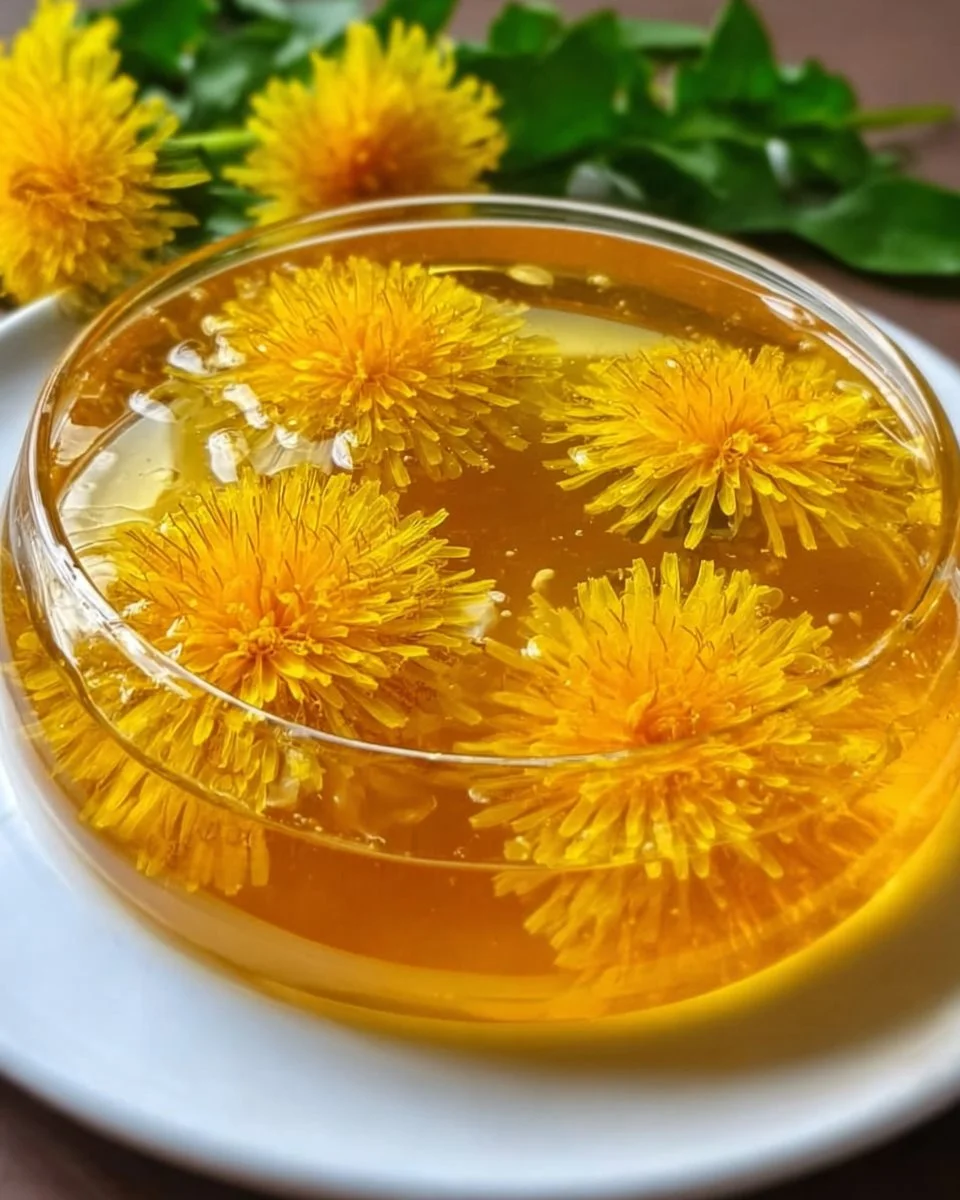
Sun-warmed and golden, dandelion jelly tastes like spring turned into sunshine on a spoon. The first bite surprises you: floral and honeyed, with a bright citrus lift that cuts through the sweetness. It spreads silkily across toast, beads like liquid sun on scones, and perfumes the air with a faint meadow aroma that makes you close your eyes and remember a warm afternoon barefoot in the grass.
The texture sits perfectly between translucent and jewel-like — glossy, smooth, and slightly wobbling in the jar. It holds a delicate bloom of flavor without ever becoming cloying. Each spoonful offers a soft, mellow floral note framed by lemon tang and sugared warmth, an invitation to taste a season that only many of us notice when it’s already gone.
Why You’ll Love This Dandelion Jelly
You’ll love this Dandelion Jelly because it transforms a humble, everywhere weed into something elegant and unexpected. It tastes sophisticated without requiring fancy ingredients, and the result feels like a tiny act of celebration: a homemade preserve that tells a story of foraging, patience, and bright flavors. The jelly pairs wonderfully with simple breakfasts, tea-time pastries, and charcuterie boards, so it shines at lazy weekend mornings and at gatherings where you want to impress without stress.
This recipe stands out because it preserves the fleeting floral character of dandelions — not a heavy, earthy jam, but a light, clean-flavored jelly. It also allows creativity: swap sugars, adjust acidity, or blend petals with other floral infusions for new takes. For those who love small-batch projects, the process rewards you with jars that look as beautiful as they taste.
Preparation Phase & Tools to Use
A little preparation makes this jelly effortless. Gather your tools first so you can work quickly once the petals are ready.
Essential tools and why each matters:
- Large pot (4–6 quart): You need room to simmer petals and water without boiling over and enough surface area to extract flavor.
- Fine-mesh strainer and cheesecloth or a jelly bag: Filters out tiny particles and yields a crystal-clear jelly.
- Measuring cups and a kitchen scale: Accurate liquid and sugar ratios help the pectin set reliably.
- Wooden spoon or heatproof spatula: For stirring without scratching your pot.
- Ladle and funnel: Make jar-filling neat and safe for hot liquid.
- Sterilized jars and lids (half-pint or 8 oz recommended): Proper jars keep the jelly safe and visually appealing.
- Water bath canner or large stockpot with rack: For processing jars if you want shelf-stable preserves.
- Candy thermometer (optional): Useful if you want to check boiling points and temperature-based set.
Practical preparation tips:
- Harvest in the morning after the dew dries but before the heat of the day; the petals are most fragrant then.
- Only use the yellow petals; the green calyx can add bitterness. Snip petals off at the base or gently pluck them.
- Work quickly once petals are picked; rinse them gently in cool water and drain in a colander.
- Measure the petal infusion after straining rather than guessing volume — the pectin and sugar amounts depend on accurate liquid measurements.
Ingredients for Dandelion Jelly
- Dandelion flowers: Use plenty — many recipes call for several cups of petals. Pick from pesticide-free areas and remove all green parts to avoid bitterness. You can substitute with other edible flowers (like elderflower or chamomile) for different floral notes, though flavors will change.
- Water: Forms the infusion. Spring or filtered water gives the cleanest flavor. You can use part herbal tea for complexity, but it may alter color and flavor.
- Sugar: Sweetens and helps the pectin set. White granulated sugar gives the brightest, clearest jelly. Light brown sugar adds a deeper, caramel note. For lower-sugar versions, use a low- or no-sugar pectin and adjust instructions accordingly.
- Lemon juice: Provides acidity necessary for pectin to work and brightens the floral flavor. Freshly squeezed is best. Substitutions like citric acid work in a pinch but require precise measurement.
- Pectin: Use a fruit pectin suited to the sugar level you choose (regular pectin for standard sugar, low-sugar pectin for reduced-sugar recipes). Liquid pectin and powdered pectin behave slightly differently — follow the package directions and adjust timing.
How to Make Dandelion Jelly
-
Gather dandelion flowers and rinse well.
- Pick only the yellow petals from pesticide-free lawns. Pluck or snip petals away from the green base; removing the green parts prevents bitterness. Rinse gently in a colander to remove dirt and tiny insects, then let drain.
-
Boil the flowers in water to extract flavor, then strain.
- Place petals in a large pot and add water (enough to cover by an inch or according to your recipe’s liquid ratio). Bring to a simmer, lower heat, and steep gently for 20–45 minutes until the water turns a golden hue and smells floral. Do not boil aggressively; you want extraction, not reduction. Strain the liquid through a fine-mesh strainer lined with cheesecloth or a jelly bag and press or let drip until you collect the infusion. Measure the liquid volume — accuracy matters for the next steps.
-
Measure the liquid, and mix with sugar and lemon juice in a pot.
- Return the measured dandelion infusion to the pot. For each cup of liquid, add the recommended amount of sugar in your recipe (commonly about 1 cup sugar per cup of liquid for classic jelly). Stir in fresh lemon juice (about 1–2 tablespoons per cup of liquid) to balance flavor and help the pectin set. Heat the mixture gently, stirring until the sugar dissolves.
-
Stir in pectin and bring to a boil.
- Add powdered pectin or follow your liquid pectin instructions. Increase heat and bring the mixture to a rolling boil that cannot be stirred down. Boil for the time specified by your pectin package (often 1–2 minutes for powdered pectin). Watch for foam and skim it off with a spoon if desired for a clearer jelly. Tip: if you see persistent foam, a small knob of butter can reduce foaming without affecting flavor.
-
Pour into sterilized jars and seal.
- Remove the pot from heat and ladle hot jelly into hot, sterilized jars, leaving 1/4 inch headspace. Wipe rims clean, apply lids, and screw on bands until fingertip-tight. Jars may seal as they cool; you’ll hear the satisfying “pop.”
-
Process in a canner if desired for preservation.
- For shelf-stable storage, process jars in a boiling water bath for 5–10 minutes (adjust time for altitude). Cooling times vary; always check seals before storing. If you prefer fresh refrigerator jelly, skip the canning and refrigerate once cooled.
Small tips within steps:
- Always follow the pectin manufacturer’s instructions closely — timing, proportions, and whether to add pectin early or late matters.
- If you prefer a clearer jelly, let infused liquid sit overnight in the fridge to allow sediment to settle before straining again.
- Test for set by chilling a small spoonful: if it wrinkles when pushed, it’s ready.
Chef’s Notes & Helpful Tips
Make-ahead tips:
- Make the flower infusion a day ahead and keep it chilled. This deepens flavor and lets any sediment settle for a crystal-clear jelly.
- Sterilize jars in advance and keep them hot until filling to prevent jar breakage from hot liquid.
Cooking alternatives:
- Slow cooker infusion: Simmer petals on low for 3–4 hours for a hands-off steep with gentle extraction. Strain as usual.
- Oven drying: If fresh flowers are scarce, you can dry petals in a very low oven (under 140°F / 60°C) until dry, then rehydrate in hot water to make a concentrated infusion.
- Microwave: For small batches, heat the petals and water in a microwave-safe bowl in short bursts to steep quickly, but avoid overheating — flavor can go dull.
- Air fryer: Not ideal for infusion, but you can gently dry petals in an air fryer on the lowest setting if it offers precise low-heat control.
Customization ideas:
- Add a vanilla bean or a split cardamom pod during steeping for warm aromatics.
- Stir in a spoonful of honey after cooking for a layered sweetness (substitute part of sugar with honey carefully; it can affect setting).
- Blend in a few mashed strawberries or raspberries for a floral-fruit jelly, adjusting pectin as fruit affects gel strength.
- For a spiced winter version, steep with a cinnamon stick and a few cloves, then strain before proceeding.
Common Mistakes to Avoid
- Leaving green parts on the flowers: The green calyx and stems add bitter, tannic notes. Remove them thoroughly to keep the jelly bright.
- Guessing liquid volume: Pectin and sugar ratios depend on the exact amount of infusion. Measure after straining to ensure the jelly sets correctly.
- Using the wrong pectin: Low-sugar pectin and regular pectin behave differently. Using the wrong type without adjusting sugar or technique leads to runny jelly or overly firm results. Read the package and follow those directions.
- Overcooking the pectin: Boiling beyond the recommended time can break down pectin, preventing a set. Time the rolling boil carefully.
- Skipping jar sterilization or processing: If you intend shelf-stable jars, don’t skip the water-bath processing. Unprocessed hot-fill jars can harbor bacteria if not sealed properly.
- Harvesting from treated lawns: Pesticides and herbicides concentrate in blooms. Only use flowers from safe, untreated areas.
What to Serve With Dandelion Jelly
- Crusty sourdough toast: The tang of sourdough highlights the jelly’s floral sweetness.
- Warm scones or biscuits: Soft, buttery pastries soak up the jelly and balance its brightness.
- Cream cheese on bagels: The creamy tang and smooth texture make a decadent contrast to the jelly’s sparkle.
- Fresh goat cheese and crackers: The savory, slightly tart cheese amplifies the jelly’s floral notes on a cheese board.
- Roasted pork or chicken glaze: Brush the jelly over roasted meats in the final minutes for a glossy, sweet-floral finish.
- Swirled into Greek yogurt or ricotta: A spoonful transforms plain dairy into a fragrant treat for breakfast or dessert.
- Lemon pound cake or angel food cake: Use as a topping or spread between layers for an elegant, seasonal dessert.
- Cocktail syrup or mocktail mixer: Warm the jelly with a splash of water to create a syrup for cocktails, adding a unique floral note to gin or sparkling wine.
Storage & Reheating Instructions
- Refrigerator: Once opened, keep jars refrigerated and use within 3–4 weeks. Store in a clean jar with a tight lid.
- Freezer: For longer storage, freeze jelly in freezer-safe containers, leaving headspace for expansion. Freeze up to 8–12 months. Thaw overnight in the fridge before use.
- Shelf-stable (canned): Properly processed jars in a water bath can store at cool, dark room temperature for up to a year. Always check seals and appearance before consuming.
- Reheating: Gently warm jelly in a small saucepan over low heat to loosen for glazing or drizzling. Avoid boiling; heat only until the jelly liquefies enough to spread.
Estimated Nutrition Information
Approximate values per tablespoon (15 g) — values vary by recipe and exact sugar used:
- Calories: 45–55 kcal
- Carbohydrates: 12–14 g (mostly sugar)
- Fat: 0 g
- Protein: 0 g
- Fiber: 0–0.2 g
Nutrition estimates assume traditional sugar-based jelly. For low-sugar or alternative sweetener versions, calorie and carbohydrate counts will differ. These figures are approximate; consult a nutrition calculator for precise analysis based on your exact ingredients and quantities.
FAQs
Q: Are dandelion flowers safe to eat?
A: Yes, dandelion flowers are edible and have a long history of culinary use, but only when harvested from pesticide-free areas. Use flowers that have not been treated with herbicides, insecticides, or fertilizers. Pick healthy, vibrant blossoms and remove any green parts to avoid bitterness. If you have plant allergies or are unsure, try a small amount first.
Q: When is the best time to harvest dandelions for jelly?
A: Harvest in spring through early summer when blooms are fresh and plentiful. Morning after the dew dries and before the day’s heat gives you petals at their most fragrant. Avoid flowers that are past their prime or have started to brown.
Q: Why did my jelly not set?
A: The most common causes are inaccurate liquid measurement, incorrect pectin type or amount, not reaching a full rolling boil, or using acidic fruit in amounts that unbalance the pectin. Measure the infusion, follow your pectin’s directions exactly, and test a chilled spoonful for set before canning.
Q: Can I use bottled lemon juice or citric acid instead of fresh lemon juice?
A: Bottled lemon juice works in a pinch, but fresh juice gives brighter flavor. If using citric acid, use precise small measurements (typically 1/8 teaspoon per cup of liquid) as it’s more concentrated. Always adjust to taste and maintain necessary acidity for pectin to set.
Q: How much dandelion flower do I need for this jelly?
A: Quantities vary by recipe, but plan for a large volume of fresh flowers because petals compact dramatically when you remove green parts. For a modest batch (about 4–6 half-pint jars), expect to pick several quarts of whole blooms, which might yield a few cups of petals. Patience helps — the petals weigh less than they appear.
Q: Can I make this vegan?
A: Yes. Standard dandelion jelly is vegan already since it uses fruit pectin (plant-based), sugar, and lemon juice. Confirm that your sugar is not processed with bone char if you strictly avoid that in cane sugar — use organic cane sugar or beet sugar if preferred.
Q: How do I keep the jelly’s color vibrant?
A: Strain carefully to remove sediment, avoid overcooking, and add lemon juice to preserve brightness. Store jars away from direct sunlight; heat and light can darken color over time.
Q: Is there a substitute for pectin?
A: You can make a freezer-style jelly without pectin by boiling longer until the mixture reduces and thickens, or by using chia seeds as a thickener for spreads. However, pectin gives the classic clear, stable set that most people expect from jelly. If choosing no-pectin methods, expect differences in texture and stability.
Conclusion
Making Dandelion Jelly rewards you with jars of sunny, floral flavor and the satisfaction of turning foraged blooms into something elegant and versatile. It feels like bottling a moment of spring — and then sharing it across toast, cheese, and cakes. If you want a deeper walkthrough, I recommend the detailed guide at Dandelion Jelly – Practical Self Reliance for variations and troubleshooting tips. Try a small batch first, savor the aroma as the petals steep, and enjoy the simple magic of homemade jelly.
Print
Dandelion Jelly
- Total Time: 1 hour 15 minutes
- Yield: 4 half-pint jars
- Diet: Vegan
Description
Homemade dandelion jelly captures the essence of spring with floral and citrus notes, transforming simple petals into an elegant preserve.
Ingredients
- Dandelion flowers (as many as you can pick, pesticide-free)
- Water (enough to cover petals by an inch)
- Sugar (about 1 cup per cup of liquid)
- Lemon juice (1–2 tablespoons per cup of liquid)
- Pectin (regular or low-sugar depending on your choice)
Instructions
- Gather dandelion flowers and rinse well.
- Boil the flowers in water to extract flavor, then strain.
- Measure the liquid, and mix with sugar and lemon juice in a pot.
- Stir in pectin and bring to a boil.
- Pour into sterilized jars and seal.
- Process in a canner if desired for preservation.
Notes
To ensure a crystal-clear jelly, strain carefully and avoid overcooking. Optional: customize with spices or other floral infusions.
- Prep Time: 30 minutes
- Cook Time: 45 minutes
- Category: Preserve
- Method: Canning
- Cuisine: American
Nutrition
- Serving Size: 1 tablespoon
- Calories: 50
- Sugar: 12g
- Sodium: 2mg
- Fat: 0g
- Saturated Fat: 0g
- Unsaturated Fat: 0g
- Trans Fat: 0g
- Carbohydrates: 13g
- Fiber: 0g
- Protein: 0g
- Cholesterol: 0mg