
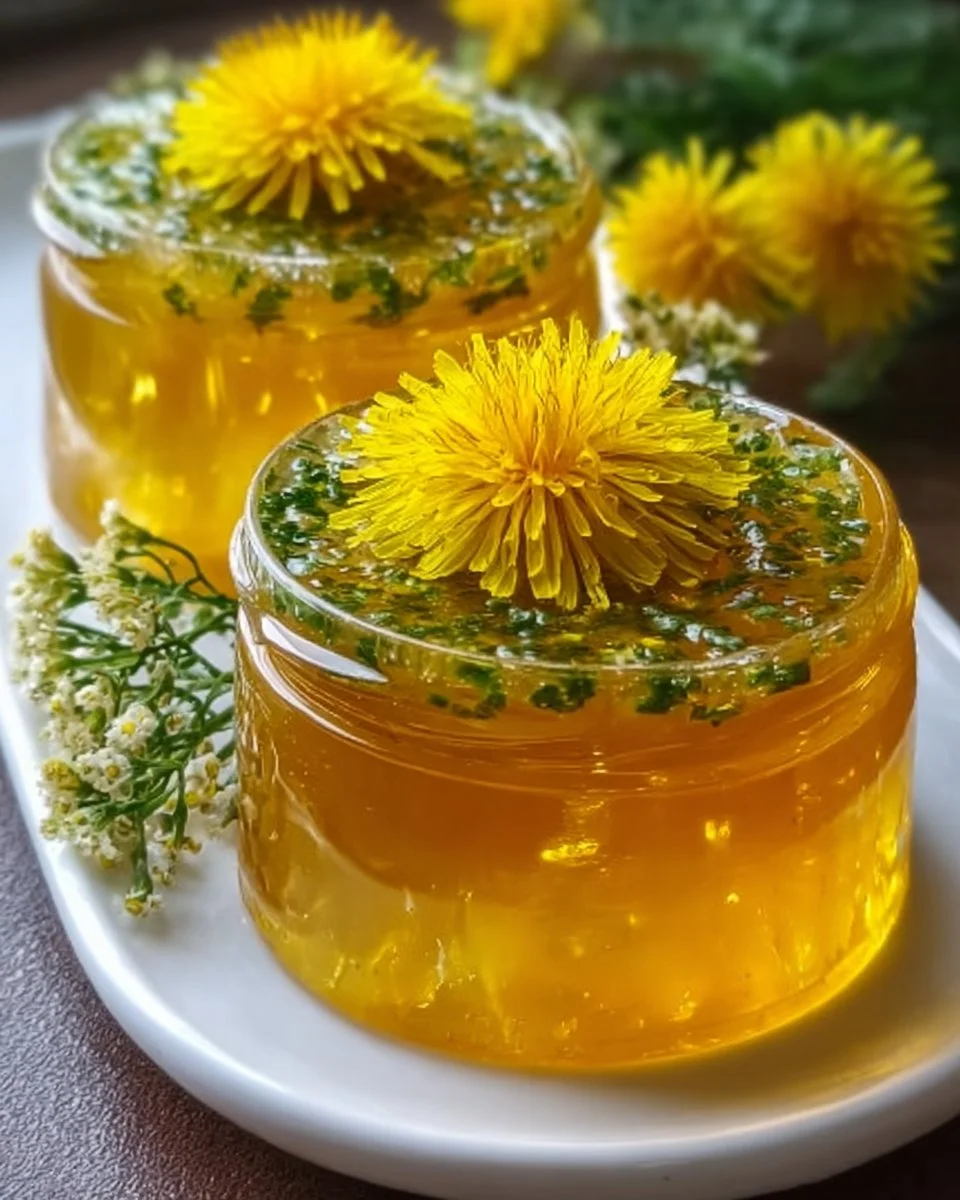
The first spoonful of this dandelion jelly catches you by surprise: sunlight and honey wrapped in a delicate, floral hug. It spreads like a memory of spring across warm toast, gleaming amber and perfuming the air with soft, green notes. The texture sits perfectly between silk and gel — not cloying, but pleasantly yielding, catching the light and the palate with gentle floral brightness.
Making this jelly feels like a small ritual. You gather a bowl of bright yellow petals, watch the steam rise as you pour boiling water over them, and wait while the kitchen fills with the faint perfume of meadow and lemon. When the jars wobble and seal, you hold a little jar of spring in your hands — something fresh, home-made, and utterly delightful to share.
Why You’ll Love This Delight in Fresh Dandelion Jelly
This jelly sings of early-season abundance. It tastes floral but grounded, with lemony brightness and a warm honeyed sweetness that never overpowers. The texture gives a clean spread on bread yet holds its own as a glaze or an elegant accompaniment to cheese. You’ll love it because it turns an underappreciated wildflower into something jubilant and gourmet — an affordable pantry jewel that elevates breakfast, tea, and dinner party platters alike.
It stands out because dandelion petals deliver a subtle complexity: grassy and slightly honeyed, with a light herbal undertone that pairs beautifully with both savory and sweet. The inclusion of honey softens the sugar edge and adds depth, while lemon juice helps the pectin do its work and keeps the flavor bright. Serve it to friends and they’ll ask how you bottled spring.
Preparation Phase & Tools to Use
A few simple tools make the process smooth and keeps your jelly pristine:
- Large heatproof bowl or pot — for steeping the petals in boiling water; use a non-reactive material like stainless steel or glass to keep flavors true.
- Fine-mesh strainer and cheesecloth — to separate petal infusion from fine sediment; the double strain gives you a clear, pretty jelly.
- Heavy-bottomed saucepan (3–4 quart) — for cooking the jelly; even heat prevents scorching.
- Measuring cups and spoons — accuracy matters when working with pectin and sugar.
- Ladle and funnel — to fill jars neatly without spilling.
- Sterilized canning jars with new lids and bands — for preserving; half-pints and pints work well.
- Water-bath canner or large stockpot — to process sealed jars safely.
- Candy thermometer (optional) — useful if you want to check boiling points or ensure rapid rolling boil.
Preparation tips:
- Pick petals from pesticide-free locations, ideally mid-morning after the dew dries.
- Remove the green bases from each flower before steeping; the green parts add bitterness that muddies the flavor.
- Rinse petals quickly in a colander to remove dust or tiny insects, then pat dry gently.
- Weigh or measure your infused liquid after straining — the recipe depends on liquid volume to balance pectin and sugar.
Ingredients for Delight in Fresh Dandelion Jelly
- 2–4 cups Dandelion Petals (gather from pesticide-free areas)
- 4 cups Water (boiling water for steeping)
- ¼ cup Lemon Juice (freshly squeezed)
- 1 package Powdered Pectin (high-methoxyl pectin preferred)
- 3–4 cups Sugar (provides sweetness; adjust to taste and pectin instructions)
- 1 cup Honey (natural sweetener alternative; adds floral depth)
- Fresh Herbs to taste (like mint or basil) — optional, for added flavor
Key ingredient notes and substitutions:
- Dandelion Petals: Use only the yellow petals, not the green calyx. If you’re short on petals, concentrate flavor by using 2 cups of petals but steeping them longer or gently simmering for a short time to pull more color and aroma.
- Powdered Pectin: High-methoxyl (regular) pectin needs sugar and acid to gel properly. If you prefer a low-sugar recipe, use a low- or no-sugar pectin and follow that product’s instructions — it changes the sugar ratios and technique.
- Sugar vs. Honey: Sugar helps pectin set and provides shelf stability. Honey adds complexity and lowers the amount of refined sugar needed but won’t fully replace sugar if you use high-methoxyl pectin. You can reduce sugar slightly and increase honey, but follow pectin guidance. For a wholly honey-sweetened jelly, use a pectin formulated for low- or no-sugar recipes.
- Lemon Juice: Provides the acid pectin needs and lifts flavor. You can’t skip it if using regular pectin.
- Fresh Herbs: Add a sprig of mint or basil while steeping petals for an aromatic twist; remove the herbs before straining.
How to Make Delight in Fresh Dandelion Jelly
Step-by-Step Instructions
-
Harvest and prepare petals
- Pick bright yellow dandelion flowers from pesticide-free areas. Snap off and discard the green bases; they taste bitter. Place petals in a clean bowl and give them a gentle rinse to remove dust. Pat lightly to drain.
-
Steep the petals
- Bring 4 cups of water to a boil and pour it over the petals in a heatproof bowl or pot. Add any fresh herbs here if using. Cover and let steep for 20–30 minutes, or until the liquid turns a warm golden color and smells floral. Taste a small spoonful; it should be floral and slightly grassy, not bitter.
-
Strain the infusion
- Line a fine-mesh strainer with cheesecloth and strain the infusion into a measuring cup or bowl. Press gently to extract the liquid, but avoid forcing any green bits through. Measure the liquid; you’ll want roughly 3 to 4 cups of infused liquid. If short, supplement with a bit of water.
-
Combine with pectin and lemon
- Pour the dandelion liquid into your heavy-bottomed saucepan. Stir in the powdered pectin and lemon juice thoroughly. Bring the mixture to a full rolling boil over medium-high heat, stirring frequently to avoid scorching.
-
Add sugar and honey
- Once the infusion reaches a full, steady boil, add the sugar and honey all at once. Return quickly to a hard boil that cannot be stirred down. Boil hard for 1 minute (or follow the pectin package timing), stirring constantly.
Tip: If foam forms, skim it off with a spoon for clearer jelly. A few bubbles won’t hurt the flavor.
-
Test for set (optional)
- To test: chill a metal plate in the freezer. Spoon a small amount of the boiling jelly onto the plate and return it to the freezer for 1 minute. If it wrinkles when pushed with a finger, it’s set. If not, boil another minute and test again. Avoid overcooking — this darkens flavor.
-
Jar and process
- Ladle the hot jelly into sterilized jars, leaving 1/4-inch headspace. Wipe rims clean, apply lids and bands snugly. Place jars in a water bath canner and process for about 10 minutes (adjust for altitude). Remove and let cool undisturbed for 12–24 hours; lids should pop and seal.
-
Cool and label
- Once cool, check seals, label with date and content, and store unopened jars in a cool, dark pantry. Refrigerate after opening.
Chef’s Notes & Helpful Tips
Make-ahead tips:
- You can make the petal infusion ahead and refrigerate it up to 24 hours before finishing the jelly. Reheat gently before adding pectin and sugar.
- Pre-sterilize jars and keep them warm in the oven (off) before filling to reduce thermal shock.
Cooking alternatives:
- Slow cooker: Steep petals in the slow cooker on low for 1–2 hours for a gentler infusion — then strain and proceed.
- Microwave: For very small batches, you can heat the infusion and sugar mixture in the microwave in short bursts, stirring frequently, but you’ll need to monitor boiling and be careful of splatters.
- Oven or dehydrator: If you want a more concentrated flavor, dry a portion of petals in a low oven or dehydrator briefly and add them to the steep for an extra floral note. (Do not use the oven to “cook” the jelly itself.)
- Air fryer: Use only as a dehydrator if your model supports low-temperature drying; don’t cook jelly in an air fryer.
Customization ideas:
- Stir in a teaspoon of lemon zest for an energetic citrus lift.
- Add a tablespoon of finely chopped mint at the end for a cooling finish.
- Fold in a little lavender syrup or a dash of vanilla to make a dessert-forward jar.
- For savory use, reduce sugar slightly and add a pinch of black pepper or mustard seed for a glaze on roasted meats.
Common Mistakes to Avoid
- Leaving the green flower bases on: they add bitterness. Always remove them before steeping.
- Skimping on acid or sugar with regular pectin: Regular (high-methoxyl) pectin needs the right ratio of sugar and acid to gel. Follow package instructions carefully or opt for low-sugar pectin if you want less sugar.
- Not boiling at a hard rolling boil after adding sugar: the jelly may fail to set if it never reaches that vigorous boil.
- Overcooking the jelly: extended boiling deepens color but can cook away the delicate floral notes and darken the flavor. Test often and stop once set.
- Skipping jar sterilization or improper sealing: this risks spoilage. Sterilize jars and process in a hot water bath, following safe canning guidelines, and check seals before storing.
What to Serve With Delight in Fresh Dandelion Jelly
- Warm buttered toast — the classic: the jelly melts into the butter and brightens a simple slice.
- Soft goat cheese — the tang meets floral sweetness beautifully; serve on crostini.
- Scones or biscuits with clotted cream — a tea-time dream, pairing creaminess with floral lift.
- Greek yogurt and granola — swirl a spoonful into morning yogurt for an elegant breakfast.
- Glaze for roasted pork or chicken — brush during the last minutes of roasting for a glossy, aromatic finish.
- Pancakes and waffles — spoon over hot stacks; the lemon and honey notes dance with maple.
- Charcuterie board — pair with nutty cheeses, prosciutto, walnuts, and crusty bread for contrast.
- Salad vinaigrette base — whisk a little jelly into oil and vinegar for a bright, floral vinaigrette that dresses spring greens.
Storage & Reheating Instructions
- Pantry (unopened jars): Store sealed jars in a cool, dark place for up to 12–18 months; flavor is best within the first year.
- Refrigerator (opened): After opening, refrigerate and use within 3–4 weeks for peak flavor and safety.
- Freezer: Spoon jelly into freezer-safe containers leaving headspace and freeze up to 6–12 months. Thaw in the refrigerator.
- Reheating: Gently warm jelly in a small saucepan over low heat or microwave in short bursts if you need it pourable. Avoid hard boiling when reheating to preserve delicate aromatics. Never reprocess opened jars by canning.
Estimated Nutrition Information
Approximate per tablespoon (15 g):
- Calories: 55–70 kcal
- Carbohydrates: 14–18 g (mostly sugars)
- Fat: 0 g
- Protein: <1 g
- Sodium: 0–5 mg
- Fiber: <1 g
These figures are rough estimates and vary based on the exact sugar and honey amounts used, the final yield, and whether you reduce sugar. For precise numbers, calculate based on the final recipe yield and ingredient labels.
FAQs
-
Are dandelions safe to eat?
Yes, dandelion petals are edible and have a long history of culinary and medicinal use. Only harvest from areas you trust — avoid roadways, lawns treated with pesticides, or areas with heavy pollution. Always remove the green base of the flower to avoid bitterness, and wash petals to remove dirt or tiny insects. -
My jelly didn’t set. What went wrong?
Several things can prevent a set: insufficient acid (lemon juice), not reaching a full rolling boil after adding sugar, using the wrong type of pectin without adjusting sugar, or inaccurate measurements. First, make sure you used the pectin recommended for your sugar level. If you used regular pectin, ensure you followed its sugar and acid requirements. If still runny, you can reboil the batch with an additional pectin packet following manufacturer instructions. -
Can I make this jelly with less sugar or all honey?
You can reduce sugar only if you use a pectin formulated for low- or no-sugar recipes. High-methoxyl pectin relies on sugar to gel. Honey adds lovely flavor but cannot fully replace sugar when using regular pectin. If you want low-sugar, purchase suitable pectin and follow its directions precisely. -
When is the best time to harvest dandelions?
Harvest in spring when the flowers are fresh and fully open but not past their prime. Morning after the dew dries gives blossoms that are bright and less likely to bruise. Avoid picking after rain, which can dilute flavor and make petals soggy. -
Can I add other flowers or herbs to this jelly?
Absolutely. Rose petals, nasturtium, or borage can add different floral notes, but always use edible flowers and avoid hybrids or unknown species. Herbs like mint, basil, or lemon verbena pair wonderfully when added to the steep and removed before jarring. Start with small amounts to avoid overpowering the dandelion flavor. -
How long will opened jelly last in the fridge?
Opened jelly kept refrigerated will typically retain best quality for 3–4 weeks. Use clean utensils to avoid contamination. If you notice off smells, mold, or bubbling, discard immediately. -
Is water bath canning necessary?
If you plan to store jars long-term in the pantry, water bath processing ensures a safe vacuum seal and shelf stability. If you intend to keep jars in the refrigerator and use quickly, you can skip the water bath, but shelf storage requires proper canning.
Conclusion
This dandelion jelly turns a handful of spring petals into something luminous and unforgettable. It tastes like a sunlit morning: floral, bright, and warmed by honey. Whether you spread it on a scone at a cozy tea, glaze a roast for a dinner party, or tuck a jar into a gift basket, it carries the season in every spoonful. If you’re new to foraging or want gentle, practical guidance on gathering edible wild plants, this helpful resource on 10 Easy Spring Foraging Finds For Food And Medicine offers a lovely starting point. Now tie on an apron, fill a bowl with yellow petals, and let spring set in jars.
Print
Delight in Fresh Dandelion Jelly
- Total Time: 50 minutes
- Yield: 4 cups 1x
- Diet: Vegetarian
Description
A luminous jelly made from dandelion petals, infused with lemon and honey, perfect for spreading on toast or glazing meats.
Ingredients
- 2–4 cups Dandelion Petals (gather from pesticide-free areas)
- 4 cups Water (boiling water for steeping)
- ¼ cup Lemon Juice (freshly squeezed)
- 1 package Powdered Pectin (high-methoxyl pectin preferred)
- 3–4 cups Sugar (adjust to taste)
- 1 cup Honey (natural sweetener)
- Fresh Herbs to taste (like mint or basil) — optional
Instructions
- Harvest and prepare petals: Pick bright yellow dandelion flowers from pesticide-free areas, remove the green bases, rinse, and pat dry.
- Steep the petals: Pour boiling water over petals in a heatproof bowl, cover, and steep for 20–30 minutes.
- Strain the infusion: Use a fine-mesh strainer lined with cheesecloth to separate the liquid from the petals.
- Combine with pectin and lemon: In a saucepan, stir the dandelion liquid with pectin and lemon juice, then bring to a boil.
- Add sugar and honey: Once boiling, add sugar and honey, return to a hard boil for 1 minute.
- Test for set (optional): Chill a plate, put a spoon of jelly on it, and check if it wrinkles when pushed.
- Jar and process: Ladle into sterilized jars, leaving headspace, and process in a water bath for about 10 minutes.
- Cool and label: After processing, cool jars and label with date and content.
Notes
Pick petals from pesticide-free locations and remove the green bases to avoid bitterness. You can make the infusion ahead and refrigerate it for up to 24 hours.
- Prep Time: 30 minutes
- Cook Time: 20 minutes
- Category: Preserves
- Method: Canning
- Cuisine: American
Nutrition
- Serving Size: 1 tablespoon
- Calories: 65
- Sugar: 16g
- Sodium: 0mg
- Fat: 0g
- Saturated Fat: 0g
- Unsaturated Fat: 0g
- Trans Fat: 0g
- Carbohydrates: 17g
- Fiber: 0g
- Protein: <1g
- Cholesterol: 0mg