
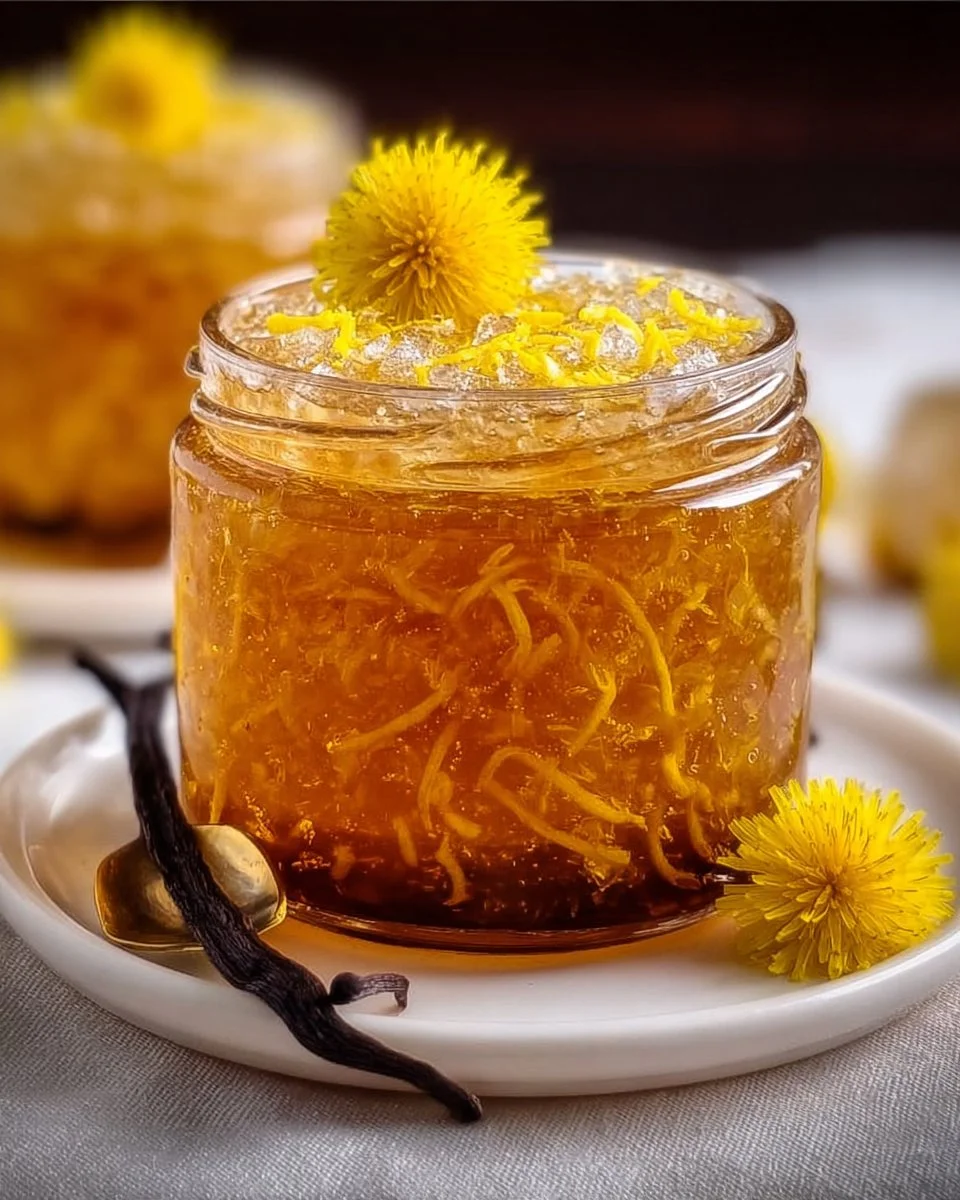
The first time I made dandelion jelly, the kitchen filled with a bright, sunlit perfume—honeyed florals warmed by lemon, with a whisper of vanilla curling through the steam. A spoonful cooled on my palate felt soft and silky, like a meadow condensed into a spread: golden, ever so slightly viscous, and singing with citrus spark. Every bite invited me to slow down and savor the surprising elegance of a flower many of us stepped over as kids.
This Homemade Dandelion Jelly Recipe with Vanilla Bean and Lemon Zest tastes like a memory and a discovery at once. The jelly wobbles with a glassy shine, holds tender body on toast, and melts luxuriously into warm buttered scones. It brings the improbable feeling that something wild and simple has been captured in a jar—perfect for gifting or brightening an ordinary breakfast.
Why You’ll Love This Homemade Dandelion Jelly Recipe with Vanilla Bean and Lemon Zest
You’ll fall for this recipe because it transforms humble dandelion petals into something sublime. The flavor balances floral honey-like notes with bright lemon tang and the warm, round depth of vanilla bean. Texture matters here: the jelly sets firm enough to spread but remains glossy and tender—no gritty crystals or dull flatness.
This jelly stands out for its seasonal charm and sustainable story. You forage a common plant and turn it into a pantry treasure. Serve it at weekend brunch, tuck it into a picnic basket, or gift it in pretty jars for holidays. It’s also surprisingly versatile—pair it with cheeses, fold it into yogurts, or use it to glaze cakes. If you love preserves with personality and provenance, you’ll adore the delicate complexity of this one.
Preparation Phase & Tools to Use
Making dandelion jelly requires thoughtful tools to coax delicate flavor without metallic off-notes or cloudiness. Here’s what I use and why:
- Large non-reactive pot (stainless steel or enamel): Prevents metallic flavors and allows even heating for your infusion and jelly boil.
- Fine mesh strainer or double-layer cheesecloth: Filters the petals cleanly so the jelly remains clear and jewel-toned.
- Large heatproof bowl: Catches strained liquid safely—glass or stainless work best.
- Sterilized glass jars with lids: Preserve flavor and safety; wide-mouth jars make ladling easier.
- Candy thermometer (optional): Helps monitor boiling temperature if you prefer precision, though pectin takes the guesswork out of reaching set.
- Zester or microplane: Extracts bright lemon zest without the bitter pith.
- Sharp paring knife: Splits and scrapes vanilla bean seeds.
Preparation tips:
- Harvest petals from pesticide-free areas early in the morning when they’re freshest. Remove any green or discolored bits; only the yellow petals carry the delicate floral note you want.
- Dry petals briefly—about 30 minutes on a towel—so they won’t water down your infusion.
- Sterilize jars while making the jelly by simmering them and their lids for 10 minutes; keep them hot until ready to fill.
Ingredients for Homemade Dandelion Jelly Recipe with Vanilla Bean and Lemon Zest
- 4 cups fresh dandelion petals (yellow parts only, from pesticide-free areas)
- 4 cups granulated sugar (organic cane sugar recommended)
- Juice from 2 medium lemons
- Zest from 1 lemon
- 1 whole vanilla bean, split and scraped (or 1 teaspoon pure vanilla extract as substitute)
- 4 cups water
- 1 pouch liquid pectin (e.g., Certo)
Key ingredient notes and substitutions:
- Dandelion petals: Use only the yellow parts. Green bits add bitterness. If you can’t find enough petals, a mix of dandelion and mild floral petals (like calendula) can work, but flavor changes.
- Sugar: Granulated sugar gives clean, predictable set. You can try light brown sugar for a deeper caramel note, but it will darken the jelly and slightly alter set time.
- Lemon juice and zest: Provide acidity for flavor and help with pectin gel formation. Fresh juice always tastes brighter than bottled.
- Vanilla bean: Scraped seeds give tiny black flecks and pure aroma. If you use pure vanilla extract, add it after removing the pot from heat to preserve flavor.
- Liquid pectin: Use the pouch style called for in recipes for reliable setting. Powdered pectin requires a different method and timing.
How to Make Homemade Dandelion Jelly Recipe with Vanilla Bean and Lemon Zest
-
Pick and prep petals
- Gently pick fresh dandelion petals, avoiding any green parts. Rinse petals under cold water and spread them on a clean towel to dry for about 30 minutes. Removing moisture prevents diluting the infusion later.
-
Make the dandelion infusion
- In a large non-reactive pot, combine the dried petals and 4 cups water. Bring to a boil, then reduce heat and simmer gently for 20 minutes to steep. You’ll smell floral, slightly honeyed notes as the petals release their essence.
-
Strain the infusion
- Strain the mixture through a fine mesh strainer or double-layer cheesecloth into a large bowl or pot. Press gently with the back of a spoon to extract as much liquid as possible. Discard the spent petals. Tip: Avoid squeezing too hard through cheesecloth to keep your liquid clear.
-
Return liquid and add flavorings
- Return the strained dandelion liquid to the pot. Stir in sugar, fresh lemon juice, lemon zest, and the scraped vanilla bean seeds and pod. If you’re using vanilla extract, wait to add it later (after the boil).
-
Bring to a rolling boil
- Heat the mixture over medium-high, stirring frequently so the sugar fully dissolves. Bring to a full, rolling boil that cannot be stirred down. This step ensures the sugar integrates and prepares the base for pectin.
-
Add liquid pectin
- Remove the pot briefly from the heat. Stir in the pouch of liquid pectin quickly and thoroughly, then return to a rolling boil. Stir continuously for 1–2 minutes; you should see active bubbling and thickening. Tip: Follow the pectin pouch directions if yours specifies a slightly different timing.
-
Test the set
- To test, chill a small plate in the freezer for a minute. Spoon a teaspoon of jelly onto the cold plate and let it cool for 60 seconds. Push the edge with your finger—if it wrinkles, the jelly is set. If not, boil another minute and retest. Over-boiling can darken flavors, so test often.
-
Jar the jelly
- Ladle the hot jelly into sterilized glass jars, leaving 1/4 inch headspace. Wipe rims clean with a damp cloth. Seal with lids. If you used vanilla extract instead of the bean, stir it in now off the heat.
-
Process or cool
- Optionally process jars in a boiling water bath for 10 minutes to extend shelf life. Otherwise, cool jars to room temperature and refrigerate. Remove the vanilla bean pod after cooling if you prefer to avoid it infusing longer.
Small tips inside steps: Keep jars hot to avoid cracking when hot jelly hits cold glass. Clean rim residue—sticky edges can prevent a good seal.
Chef’s Notes & Helpful Tips
Make-ahead tips:
- You can make the dandelion infusion a day ahead and refrigerate it overnight, covered. This concentrates flavor. Reheat gently before proceeding with sugar and pectin.
- Sterilize jars the day before and keep them covered in a warm oven (turned off) until filling.
Cooking alternatives:
- Slow cooker infusion: For a gentler aroma, steep petals in the slow cooker on low for 3–4 hours. Strain and continue the recipe on the stove for boiling with sugar and pectin.
- Sun infusion (sun tea style): Fill a jar with petals and water and leave in direct sun for 24–48 hours. This produces a subtle, warm flavor but requires careful food-safety judgment—boil the strained liquid well before adding sugar and pectin.
- Oven: You can warm the infusion gently in a low oven if you prefer hands-off heat, but bring to a proper rolling boil on the stovetop when adding sugar and pectin.
Customization ideas:
- Add a pinch of ground cardamom for exotic floral warmth.
- Stir in a tablespoon of local honey after the jelly cools for extra depth (do not add before boiling—heat can blunt honey’s character).
- Swap half the lemon juice for lime for a brighter, sharper finish.
- Fold in a teaspoon of lemon verbena or basil during infusion for herbal complexity; strain out before adding pectin.
Common Mistakes to Avoid
- Using green parts of the dandelion: Those leaves and stems introduce bitterness. Pick only yellow petals.
- Skipping the clear straining: If you don’t strain well, petals or bits create cloudiness and a gritty mouthfeel.
- Under- or over-boiling after adding pectin: Under-boiling prevents setting; over-boiling can break down pectin and darken the jelly’s flavor. Use the chilled plate test and test often.
- Adding vanilla extract too early: Boiling extract diminishes its aroma. Add extract off-heat; use vanilla bean for cooking time infusion.
- Not sterilizing jars: Skipping proper sterilization risks spoilage and a shorter shelf life.
- Using untreated water from unknown sources: Always use fresh, filtered water for a clean flavor.
What to Serve With Homemade Dandelion Jelly Recipe with Vanilla Bean and Lemon Zest
- Thickly buttered toast: Let the jelly sit on warm butter so it slightly melts into the crumb—simple, blissful.
- Cream cheese and crackers: The cream’s tang balances floral sweetness; use mild crackers to let the jelly shine.
- Brie or Camembert: Spoon jelly over a wheel of soft cheese; the floral-sweet glaze brightens creamy, savory notes.
- Scones or biscuits: Slather warm scones with clotted cream and this jelly for a tea-worthy treat.
- Yogurt parfaits: Layer jelly with plain Greek yogurt and granola for a sunny breakfast bowl.
- Glaze for roasted carrots: Warm a few tablespoons with a splash of olive oil and brush over roasted roots for a sweet-savory finish.
- Salad vinaigrette: Emulsify a teaspoon with lemon juice, olive oil, and mustard for a delicate dressing.
- Ice cream drizzle: Warm slightly and spoon over vanilla or honey ice cream for a floral dessert.
Storage & Reheating Instructions
Fridge:
- Unprocessed jars: Refrigerate and consume within 3–4 weeks.
- Processed and sealed jars: Store in a cool, dark pantry for up to 12 months unopened. Once opened, refrigerate and use within 3–4 weeks.
Freezer:
- Spoon jelly into freezer-safe containers leaving headspace. Freeze up to 6 months. Thaw overnight in the fridge. Note: texture may soften slightly after freezing.
Reheating:
- If you plan to re-liquefy jelly for glazing or sauces, warm it gently in a small saucepan over low heat, stirring until spreadable. Avoid prolonged boiling, which can alter flavor and color.
Estimated Nutrition Information
Approximate per tablespoon (15 g):
- Calories: 50–60 kcal
- Carbohydrates: 13–15 g (mostly sugars)
- Fat: 0 g
- Protein: 0 g
- Fiber: 0 g
Disclaimer: These values are estimates and will vary based on exact ingredient brands and portion sizes. This jelly contains significant sugar; adjust serving sizes if you monitor sugar intake.
FAQs
Q: Is it safe to eat jelly made from dandelion petals?
A: Yes, when you harvest from pesticide-free areas and properly prepare and boil the infusion and jelly, dandelion jelly is safe. Boiling the strained infusion before adding sugar and pectin helps eliminate microbes. Always sterilize jars and follow safe canning practices if you plan long-term storage.
Q: Can I use powdered pectin instead of liquid pectin?
A: You can, but the method changes. Powdered pectin typically mixes with sugar or is added earlier and requires a different boil time to activate. Follow the powdered pectin manufacturer’s instructions for quantities and timing; otherwise, you risk under- or over-setting.
Q: What if my jelly doesn’t set?
A: First, perform the cold plate test to confirm. If it doesn’t wrinkle, boil the mixture another minute and retest. If it still fails, possible causes include insufficient pectin, too much liquid, or inaccurate measurements. You can: remeasure and add more liquid pectin following the pouch’s directions, or pour the syrup into sterilized jars and refrigerate for immediate use as a sauce.
Q: Can I substitute lemon zest with dried lemon peel or bottled lemon zest?
A: Fresh zest gives the brightest, most aromatic lift. Dried peel or bottled zest lacks that fresh citrus burst and can taste muted. Use fresh if possible; if not, increase the amount slightly to compensate, but expect a subtle difference.
Q: How do I remove bitterness if the jelly tastes slightly off?
A: Bitterness often comes from green parts of the plant or over-extraction. You can balance mild bitterness by increasing lemon juice slightly for acidity, or stirring in a small amount of honey after the jelly cools to add roundness. If bitterness is pronounced, discard and remake ensuring you pick only yellow petals.
Q: Can I use this recipe for other edible flowers?
A: Yes—many flowers (like rose, elderflower, or calendula) make wonderful jellies with similar methods. Each flower has different strengths: adjust lemon and sugar to taste and test the set as some flowers yield more or less body to the infusion.
Conclusion
I hope this recipe inspires you to wander into a neighbor’s yard or a sunlit meadow to gather petals and make something unexpectedly luxurious. Homemade dandelion jelly with vanilla bean and lemon zest tastes like summer preserved: floral, bright, and warmly sweet. If you’d like another perspective or a step-by-step visual guide to making dandelion petal jelly, check out this helpful DIY dandelion petal jelly tutorial for extra inspiration. Give it a try—the first jar will taste like sunshine.
Print
Homemade Dandelion Jelly with Vanilla Bean and Lemon Zest
- Total Time: 1 hour
- Yield: 4 servings 1x
- Diet: Vegetarian
Description
A delightful sweet and floral homemade dandelion jelly enhanced with vanilla bean and lemon zest, perfect for spreading on toast or serving with scones.
Ingredients
- 4 cups fresh dandelion petals (yellow parts only)
- 4 cups granulated sugar
- Juice from 2 medium lemons
- Zest from 1 lemon
- 1 whole vanilla bean, split and scraped
- 4 cups water
- 1 pouch liquid pectin
Instructions
- Pick and prep petals: Gently pick fresh dandelion petals, avoiding any green parts. Rinse petals under cold water and spread them on a clean towel to dry for about 30 minutes.
- Make the dandelion infusion: Combine the dried petals and water in a large pot, bring to a boil, then simmer gently for 20 minutes.
- Strain the infusion: Strain the mixture through a fine mesh strainer into a large bowl or pot, extracting as much liquid as possible.
- Return liquid and add flavorings: Return the strained liquid to the pot, stir in sugar, lemon juice, lemon zest, and scraped vanilla bean seeds.
- Bring to a rolling boil: Heat the mixture over medium-high, stirring frequently, and bring to a full, rolling boil.
- Add liquid pectin: Remove from heat, stir in the liquid pectin, and return to a rolling boil for 1–2 minutes.
- Test the set: Chill a small plate in the freezer, place a teaspoon of jelly on it, and check if it wrinkles after cooling.
- Jar the jelly: Ladle hot jelly into sterilized glass jars, leaving 1/4 inch headspace, and seal them with lids.
- Process or cool: Optionally process jars in boiling water for 10 minutes or cool and refrigerate.
Notes
Harvest petals from pesticide-free areas and avoid green parts to prevent bitterness. Clean jars properly to ensure a longer shelf life.
- Prep Time: 30 minutes
- Cook Time: 20 minutes
- Category: Preserves
- Method: Canning
- Cuisine: American
Nutrition
- Serving Size: 1 tablespoon
- Calories: 60
- Sugar: 15g
- Sodium: 0mg
- Fat: 0g
- Saturated Fat: 0g
- Unsaturated Fat: 0g
- Trans Fat: 0g
- Carbohydrates: 16g
- Fiber: 0g
- Protein: 0g
- Cholesterol: 0mg