
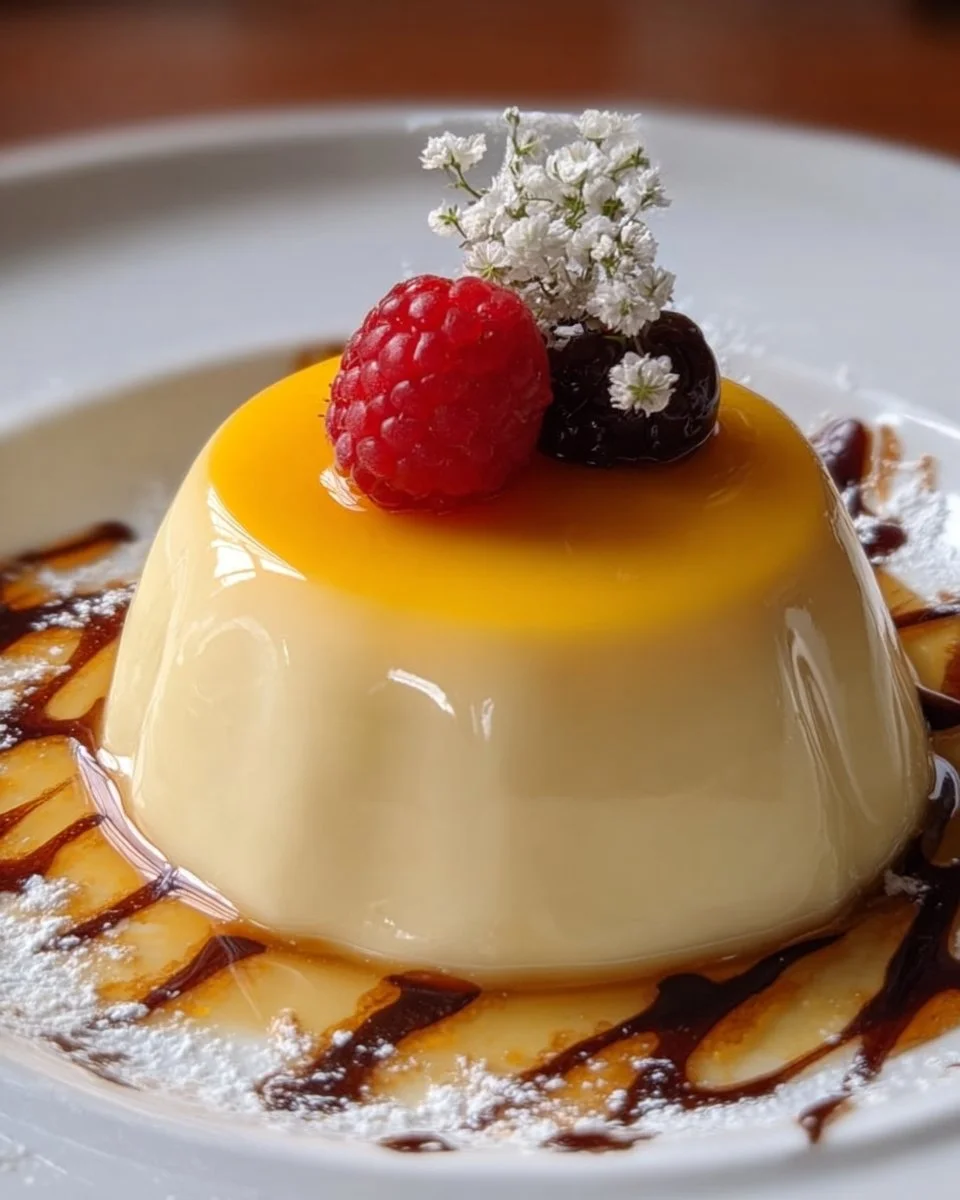
The first spoonful of this Indulgent Bavarian Cream feels like silk folding onto your tongue. A whisper of vanilla opens, then a gentle, custardy richness floods your mouth—velvet, cool, and impossibly smooth. Each bite glides between creamy and airy, the whipped cream folded in gives lift and lightness, while the egg yolk custard anchors it with comforting depth.
Serve it chilled and feel the way it softens against a berry’s bright snap or melts into a crisp tuile. The aroma of warm caramelized sugar and vanilla while you cook will lure everyone to the kitchen. This dessert looks elegant on a plate, yet it hides a humble, classic technique that makes any moment feel special.
Why You’ll Love This Indulgent Bavarian Cream
- Luxuriously silky texture: the custard base combined with folded whipped cream creates a decadent, airy mouthfeel you can’t get from mousse or pudding.
- Deep, comforting flavor: egg yolks and warm-sweet milk develop a rich, custardy backbone, while vanilla adds a fragrant lift.
- Versatile presentation: spoon it into glassware, pipe it into tart shells, or use it as a cake filling—this cream dresses up any dessert.
- Make-ahead friendly: you can set it hours or even a day ahead, which makes it perfect for entertaining.
- Crowd-pleasing yet refined: it feels like a restaurant dessert but comes together in a home kitchen without fancy equipment.
This Bavarian cream stands out because it balances indulgence with restraint—silken richness without being cloying. Whether you want a show-stopping plated dessert or a comforting finish to a Sunday meal, this recipe adapts and delivers.
Preparation Phase & Tools to Use
The right tools make this recipe effortless and consistent.
- Medium saucepan: choose one with a heavy bottom to distribute heat evenly and prevent scorching of the custard.
- Heatproof mixing bowl or metal bowl: for tempering and cooling the custard.
- Whisk: use a sturdy whisk to combine milk and sugar and to temper yolks smoothly.
- Rubber spatula: essential for folding whipped cream into custard gently to preserve airiness.
- Small bowl for gelatin: to bloom gelatin in cold water before dissolving.
- Fine-mesh sieve: to strain the finished custard for extra silkiness if any cooked bits form.
- Electric mixer or stand mixer: to whip the cream to soft peaks quickly and consistently.
- Instant-read thermometer (optional but helpful): to ensure you don’t overcook the custard; aim for 170–175°F (77–80°C) when it’s thickened but not boiling.
- Serving dishes or ramekins: choose pretty glassware or molds to highlight the cream’s delicate texture.
Preparation tips
- Measure ingredients before you start. Bavarian cream moves quickly once the custard begins to thicken.
- Bloom the gelatin first (it must soften in cold water) so it dissolves completely when added to the warm custard.
- Chill serving dishes ahead of time for a clean, cool set.
- If you plan to make a flavored variation (coffee, citrus, chocolate), prepare flavorings in advance and strain them into the warm custard.
Ingredients for Indulgent Bavarian Cream
- 2 cups heavy cream
- 1/2 cup milk
- 1/2 cup sugar
- 5 large egg yolks
- 1 tablespoon gelatin
- 1 teaspoon vanilla extract
- Pinch of salt
Key ingredient notes and substitutions
- Heavy cream: provides the lush mouthfeel. For a lighter version, you can use half-and-half, but the texture will be less rich and set more softly.
- Milk: whole milk gives the best body. Low-fat milk will thin the custard and change mouthfeel.
- Sugar: balances the eggy richness. For a less sweet result, reduce sugar by 1–2 tablespoons.
- Egg yolks: create the classic custard base. Don’t skip them—egg yolks are responsible for the creamy, silky structure.
- Gelatin: ensures the cream sets cleanly. For a vegetarian alternative, use agar-agar (use manufacturer’s conversion and be mindful that agar sets more firmly and differently).
- Vanilla extract: use pure vanilla for the best aroma; vanilla bean paste or scraped vanilla bean adds an extra layer of fragrant flecks.
- Salt: a small pinch enhances all the flavors.
How to Make Indulgent Bavarian Cream
- Warm the milk, sugar, and salt
- In a medium saucepan, combine the 1/2 cup milk, 1/2 cup sugar, and a pinch of salt. Heat over medium heat, stirring occasionally, until the sugar dissolves and the mixture becomes warm but not boiling (you should see steam and small bubbles at the edge). Heating helps dissolve the sugar and releases aroma from the milk.
- Temper the egg yolks
- In a separate bowl, whisk the 5 egg yolks until smooth. Slowly add about one-third of the warm milk mixture to the yolks in a thin stream while whisking constantly. This step—tempering—prevents the yolks from scrambling by gradually raising their temperature.
- Thicken the custard
- Pour the tempered yolk mixture back into the saucepan with the remaining milk. Return the pan to low heat and cook gently, stirring constantly with a spatula or wooden spoon, until the custard thickens and coats the back of a spoon (about 170–175°F or until it leaves a defined line when you draw your finger across the coated spoon). Do not let it boil; boiling will curdle the eggs.
- Tip: if curdling begins, immediately remove from heat and whisk vigorously while cooling slightly—straining later can rescue the texture.
- Dissolve the gelatin and flavor
- While the custard is warm, bloom the 1 tablespoon gelatin in 2–3 tablespoons of cold water for 3–5 minutes until soft. Heat the bloomed gelatin gently (in the microwave for 5–10 seconds or in a small saucepan) until fully dissolved and liquid. Stir the dissolved gelatin into the warm custard until evenly incorporated. Add the 1 teaspoon vanilla extract and mix.
- Cool the custard to room temperature
- Transfer the custard to a heatproof bowl and cool to room temperature, stirring occasionally to release steam and speed cooling. Do not let it chill completely or the gelatin will begin to set too quickly.
- Whip the cream and fold
- Whip the 2 cups heavy cream to soft peaks using an electric mixer. Gently fold one-third of the whipped cream into the chilled (but still fluid) custard to lighten it. Fold in the remaining whipped cream in two additions, using a spatula and making wide, gentle strokes to preserve air and keep the texture silky.
- Set and serve
- Spoon or pipe the mixture into serving dishes or molds. Refrigerate until completely set, about 4 hours or overnight for a firmer set. Serve chilled.
Small tips within steps:
- Whip cream to soft peaks (not stiff) so the cream folds smoothly and the final texture remains light.
- If you want an ultra-silky finish, run the custard through a fine-mesh sieve before cooling.
- For added aroma, steep a vanilla bean or a strip of citrus peel in the warm milk and remove before tempering the yolks.
Chef’s Notes & Helpful Tips
Make-ahead tips
- Make the custard base a day ahead and store it covered in the fridge. Whip the cream fresh and fold the next day, then set in serving dishes. This reduces stress on serving day.
- Bavarian cream keeps best when set in individual dishes—serve straight from the fridge for the ideal texture.
Cooking alternatives
- Double boiler (bain-marie): use a double boiler to cook the custard gently if your stovetop runs hot or you prefer greater control.
- Microwave (for gelatin): briefly warm bloomed gelatin in the microwave until dissolved—do it in 5-second bursts to avoid overheating.
- Oven or air fryer: not suitable for cooking the custard base; this recipe relies on gentle stovetop control. For baking applications (like inserting Bavarian cream into a tart), bake shells separately and fill after chilling.
Customization ideas
- Citrus twist: infuse the milk with orange or lemon zest, then strain—finish with a touch of Grand Marnier or lemon zest.
- Chocolate: whisk in 3–4 ounces of melted dark chocolate into the warm custard before adding gelatin for a chocolate Bavarian cream.
- Coffee: steep 2 tablespoons of instant espresso or 2 tablespoons of coarsely ground espresso in the warm milk, strain, and proceed.
- Boozy adult version: fold a tablespoon of liqueur (amaretto, rum, or Grand Marnier) into the custard before folding cream.
- Fruit swirl: fold in a thick fruit purée (cooled and reduced) gently into some of the custard for marbling.
Common Mistakes to Avoid
- Overheating the custard: letting the mixture boil will curdle the eggs and ruin silkiness. Cook gently over low heat and watch for the coat-the-spoon stage.
- Skipping tempering: adding hot milk directly to yolks will scramble them. Always temper by slowly whisking warm liquid into yolks first.
- Underbloomed or overheated gelatin: if gelatin doesn’t bloom fully, it won’t dissolve and the cream won’t set properly. If you boil gelatin, it loses setting power—heat it just until dissolved.
- Over-whipping the cream: whipping to stiff peaks makes folding difficult and yields a grainy texture. Stop at soft peaks for a light finish.
- Rushing cooling and setting: folding whipped cream into hot custard will deflate it and melt the cream. Allow the custard to cool to room temperature before folding.
What to Serve With Indulgent Bavarian Cream
- Fresh berries (strawberries, raspberries, blueberries): their bright acidity and slight crunch contrast the cream’s richness.
- Caramelized figs or poached pears: warm fruit adds a luxurious, textural balance and deep, honeyed notes.
- Almond praline or toasted nuts: a crunchy element like praline adds texture and a nutty sweetness.
- Crisp tuiles or butter cookies: delicate crunch creates a pleasing contrast and makes each spoonful more interesting.
- Fruit coulis (raspberry or mango): a tart-sweet sauce brightens the palate and adds a jewel-colored presentation.
- Espresso or strong coffee: serve alongside for a bitter counterpoint to the sweet, creamy dessert.
- Chocolate shards or cocoa nibs: a bitter, crunchy accent gives depth when paired with vanilla cream.
- Champagne or dessert wine: pair with a lightly sparkling wine to cut through the cream and celebrate the moment.
Storage & Reheating Instructions
Fridge
- Refrigerate Bavarian cream covered for up to 3 days. Keep it in an airtight container or covered with plastic wrap to prevent flavor absorption from other foods.
Freezer
- Freezing changes texture because of the high fat content and the gelatin. You can freeze for up to 1 month if absolutely necessary. Freeze in airtight containers, but expect a softer, slightly grainier texture once thawed.
Thawing - Thaw overnight in the refrigerator. Do not microwave to thaw—heat will break the custard structure. After thawing, give it a gentle stir to restore creaminess.
Reheating - This dessert serves chilled; do not reheat. If you plan to transform leftovers into another dish (e.g., fold into ice cream base or warm some into a sauce), gently warm a small portion over low heat while stirring, but avoid bringing it to a boil.
Estimated Nutrition Information
Approximate per serving (recipe yields about 6 servings):
- Calories: ~400 kcal
- Fat: ~38–42 g
- Carbohydrates: ~18–22 g
- Protein: ~4–6 g
- Sugar: ~16–20 g
- Sodium: ~45–80 mg
Disclaimer: Nutrition values are rough estimates calculated for guidance only. Actual values vary by ingredient brands, portion sizes, and substitutions.
FAQs
Q: Can I make Bavarian cream without gelatin?
A: Gelatin gives Bavarian cream its classic set. Without gelatin, you can try using a higher ratio of egg yolks and cooking to a firmer custard, but it won’t set as cleanly or hold its shape. For a vegetarian option, use agar-agar—follow package conversions carefully because agar sets firmer and at higher temperatures; dissolve agar in boiling liquid and adjust quantities to achieve a similar, but slightly different, texture.
Q: How do I know when the custard is cooked enough?
A: Look for the custard to thicken enough to coat the back of a spoon and leave a clear line when you run your finger through it. If you use an instant-read thermometer, remove the pan around 170–175°F (77–80°C). Don’t let it boil; boiling signals overcooking and increases the risk of curdling.
Q: My custard looks grainy—can I fix it?
A: If it’s slightly grainy from mild overheating, strain the custard through a fine-mesh sieve into a clean bowl to remove any cooked bits, then cool and continue. If it severely curdled, blending with an immersion blender and passing through a sieve may help, but results can vary. Preventive care—gentle heat and constant stirring—works best.
Q: How firm will the gelatin make the cream?
A: One tablespoon of gelatin yields a softly set cream with a light wobble that still feels luxurious. If you prefer a firmer set for unmolding, increase gelatin slightly (about 1¼ tablespoons) or reduce liquid. Remember that chilling time and refrigeration temperature affect firmness.
Q: Can I flavor Bavarian cream with chocolate or coffee?
A: Absolutely. For chocolate, melt good-quality dark chocolate into the warm custard before adding gelatin—strain if needed. For coffee, steep espresso grounds or instant espresso in the warm milk, then strain before tempering the yolks. Adjust sugar slightly to balance bitterness.
Q: Can I use pasteurized egg yolks or a cooked custard to avoid raw egg safety concerns?
A: Cooking the custard to the correct temperature (170–175°F) pasteurizes the yolks by bringing them to safe temperatures while thickening. If you’re concerned, use pasteurized eggs or heat the mixture gently yet thoroughly to the recommended range and whisk constantly.
Conclusion
This Indulgent Bavarian Cream rewards your patience with a velvet texture and a flavor that feels both nostalgic and refined. It elevates simple ingredients—cream, yolks, and vanilla—into something celebratory, perfect for dinner parties, holidays, or a quiet, luxurious treat at home. If you want a gluten-free spin with an almond praline accent for inspiration, see this lovely variation: Bavarian Cream with Almond Praline (Gluten-free) – Cupcakeree. Give it a try; a few careful steps lead to a dessert that tastes like silk and looks like a celebration.
Print
Indulgent Bavarian Cream
- Total Time: 240 minutes
- Yield: 6 servings 1x
- Diet: Vegetarian
Description
This indulgent Bavarian Cream combines silky custard with whipped cream for a dessert that feels both light and rich. Perfect for any special occasion, serve it chilled with berries or in dessert shells.
Ingredients
- 2 cups heavy cream
- 1/2 cup milk
- 1/2 cup sugar
- 5 large egg yolks
- 1 tablespoon gelatin
- 1 teaspoon vanilla extract
- Pinch of salt
Instructions
- Warm the milk, sugar, and salt in a saucepan until warm but not boiling.
- Temper the egg yolks by slowly adding warm milk mixture to them while whisking constantly.
- Pour the tempered yolk mixture back into the saucepan and cook on low heat until thickened.
- Bloom gelatin in cold water then dissolve it and stir into the warm custard along with vanilla.
- Cool the custard to room temperature while stirring occasionally.
- Whip the heavy cream to soft peaks and gently fold it into the custard.
- Refrigerate until set, about 4 hours or overnight.
Notes
Serve chilled and can be paired with fresh berries, caramelized fruits, or sweet cookies.
- Prep Time: 15 minutes
- Cook Time: 20 minutes
- Category: Dessert
- Method: Chilling
- Cuisine: French
Nutrition
- Serving Size: 1 serving
- Calories: 400
- Sugar: 16g
- Sodium: 80mg
- Fat: 38g
- Saturated Fat: 23g
- Unsaturated Fat: 15g
- Trans Fat: 0g
- Carbohydrates: 20g
- Fiber: 0g
- Protein: 6g
- Cholesterol: 300mg