
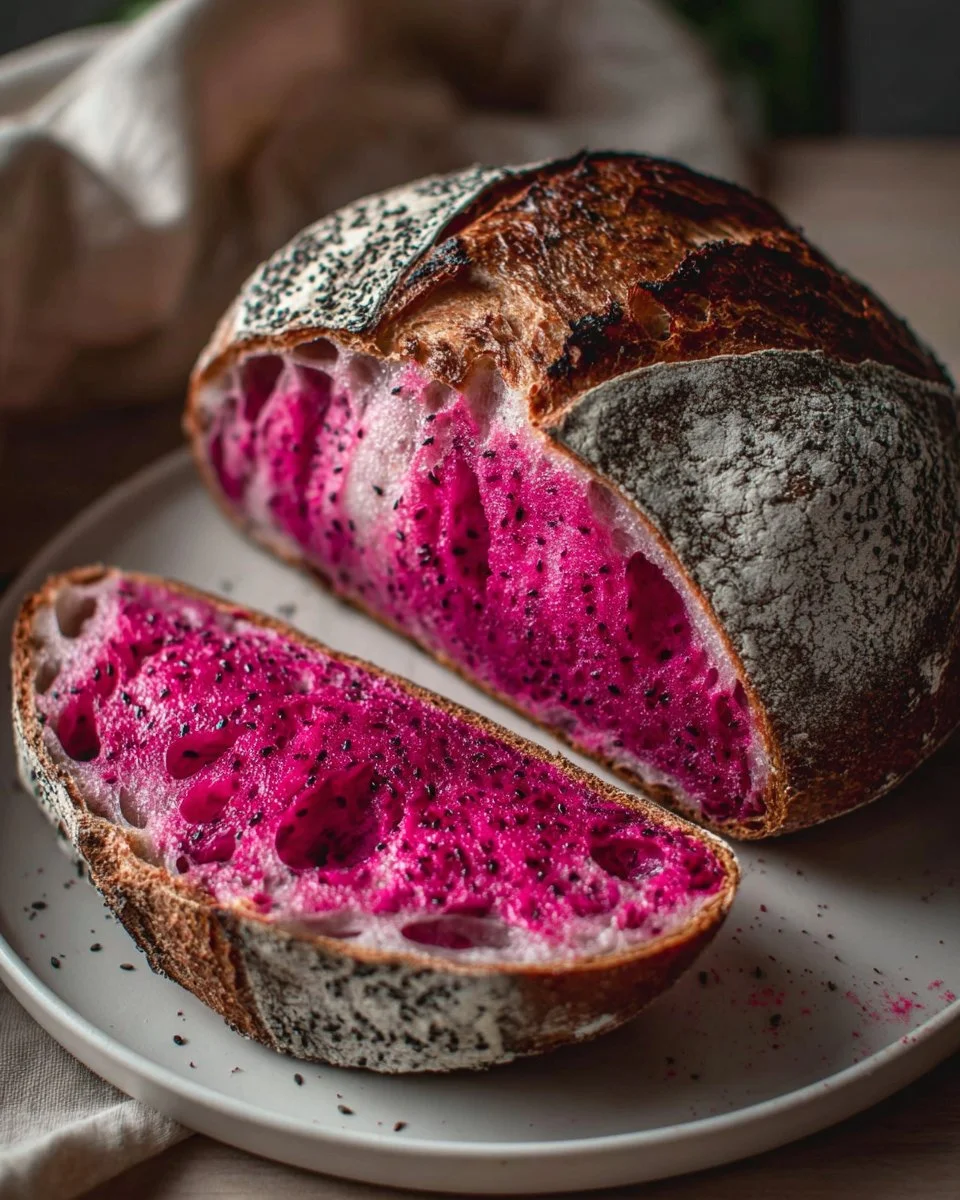
The moment you take a loaf of pink sourdough bread out of the oven, your kitchen transforms into a warm haven filled with the comforting aroma of freshly baked bread. Enveloped in a delicate, rosy hue, this unique bread beckons the senses. The crust erupts in craggy, golden-brown textures, crackling softly under gentle pressure. As you slice through, the soft, pillowy crumb reveals swirls of pastel pink, promising a taste experience that dances between subtle sweetness and hearty flavors. Each bite is a delightful interplay of airy lightness and a satisfying chew, giving way to the gentle tang of sourdough that lingers enticingly on the palate.
Visual appeal excites the imagination. The vibrant color, brought to life with dragon fruit powder, makes this bread not just food but an artful centerpiece for any gathering. Imagine serving a freshly-baked loaf at brunch, its enchanting color igniting curiosity among your family and friends. The blend of flavors and the eye-catching appearance transform a simple gathering into a memorable occasion.
Why You’ll Love This Pink Sourdough Bread
This pink sourdough bread stands out for many reasons. First and foremost, the flavor profile is exquisite. The mild sweetness of the dragon fruit beautifully complements the tanginess of the sourdough, creating a balanced taste that feels equally sophisticated and comforting. The slightly nutty notes from the bread flour harmonize with this unique fruit, resulting in a subtle sweetness that’s perfect for both savory and sweet pairings.
Beyond taste, this bread offers numerous benefits. It fills the air with a warm aroma, creating a cozy atmosphere wherever it’s served. The texture is light yet fulfilling, making it an excellent choice for both breakfast toast topped with creamy avocado or an elegant sandwich layered with smoked salmon and dill. Hosting a dinner party? Slice it into bite-sized pieces, and watch as guests relish every morsel with delight.
Preparation Phase & Tools to Use
Embarking on this sourdough adventure requires just a few essential tools that elevate your baking experience.
-
Mixing Bowl: A large, sturdy bowl allows you to easily combine ingredients without making a mess. Look for one that’s easy to clean—it’s a must for any baking project.
-
Bench Scraper: This handy tool works wonders for turning the dough onto your workspace and helps with folding and shaping. It helps you manage the dough without sticking, making your job much easier.
-
Banneton: A basket for proofing your dough. This gives your bread its beautiful shape while allowing it to breathe. Choose one lined with cloth to prevent sticking.
-
Dutch Oven: This creates the perfect baking environment. It traps steam, giving your crust the ideal oven spring and a delectable crunch.
-
Razor Blade or Lame: For scoring the dough. A sharp blade allows you to create charming designs while promoting even baking.
Preparation Tips: Always remember to feed your sourdough starter the night before. This ensures it’s bubbly and ready, giving your bread a delightful rise.
Ingredients for Pink Sourdough Bread
- 2 tbsp dragon fruit powder: The vibrant star of this recipe! Substitute with beet powder or other fruit powders for a different color and flavor.
- 500 grams bread flour: Opt for a high-protein bread flour for the best texture. All-purpose flour can work in a pinch, but the result may vary slightly.
- 12 grams salt: Essential for flavor and controlling fermentation. Don’t skip this step!
- 350 grams water: Use room-temperature water to avoid shocking the yeast during fermentation.
- 100 grams active sourdough starter: Your starter is the soul of sourdough bread. Ensure it’s bubbly and happy for the best rise!
How to Make Pink Sourdough Bread
-
Feed your starter: The night before, feed your sourdough starter. This gives it time to become active and bubbly.
-
In a large bowl, whisk together the bread flour, salt, and dragon fruit powder until well combined.
-
In a separate bowl, whisk the water and active starter together. Pour this mixture into the dry ingredients, and stir with a spatula until a rough, shaggy dough forms.
-
Cover the dough and let it rest for 30 minutes. This step is crucial, allowing the flour to hydrate fully.
-
Time for the stretch and fold: Pull one side of the dough up and stretch it about six inches, folding it over the top. Rotate the bowl a quarter turn and repeat this for each side until a tight ball forms. This counts as one set of stretch and folds. Cover and let it rest for another 20-30 minutes.
-
Repeat the stretch and fold process two more times, allowing 20-30 minutes to rest in between.
-
Bulk fermentation: Cover the dough and let it ferment at room temperature for 5-7 hours, or until it grows by about 50%. You’ll notice bubbles forming, a sign your dough is ready!
-
When it pulls away easily from the bowl and shows some bubbles, it’s time to shape. Dump it onto a floured surface and fold each side into the center. Gently spin the dough clockwise to create surface tension.
-
Transfer the dough to a banneton, cover, and refrigerate for 1 hour.
-
Preheat your oven to 425°F (220°C). Place the dough on a piece of parchment paper, dust the top with rice flour, and score it with a sharp razor.
-
Bake in a Dutch oven for 25 minutes with the lid on. This traps moisture and promotes a glorious crust. Remove the lid and continue to bake for an additional 22-25 minutes or until the top is lightly browned.
-
Let the bread cool** for 1-2 hours** before slicing. Patience is key here—the cooling process allows the crumb to set perfectly!
Chef’s Notes & Helpful Tips
-
Make-ahead tips: Prepare the dough the night before and let it ferment in the refrigerator. This not only develops flavor but also makes it more convenient for baking in the morning.
-
Cooking alternatives: If you don’t have a Dutch oven, consider using a cast-iron skillet covered with another pan. The key is to create a steamy environment that allows for that perfect rise.
-
Customization ideas: Add herbs, spices, or cheese to the dough for an additional flavor kick. Dried herbs like rosemary or mixed herbs complement the bread beautifully.
Common Mistakes to Avoid
-
Not feeding the starter: Baking with an inactive starter leads to dense bread. Always feed it the night before.
-
Ignoring dough temperature: Your dough should be at room temperature for optimal fermentation. Cold dough will stall rise.
-
Skipping the resting stages: Omitting rest periods can lead to tough bread. Allow the dough time to relax for the best results.
-
Over or under-baking: The crust color should be a beautiful brown. Trust your instincts, but use a thermometer for precision: an internal temperature of about 200°F indicates doneness.
What to Serve With Pink Sourdough Bread
-
Creamy Avocado Toast: The mildness of avocado perfectly contrasts the tangy, sweet notes of the bread.
-
Smoked Salmon: The richness of salmon adds depth, making it an upscale treat for brunch.
-
Soft Cheese Spread: Try cream cheese with herbs for a luxurious pairing.
-
Homemade Jam: Strawberry or raspberry jam plays well with the unique pink hue—sweet, tart, and utterly delightful.
-
Eggs Any Style: Pair this bread with poached eggs and a sprinkle of chives for a breakfast that screams indulgence.
-
Salads: Serve slices alongside your favorite salad for a refreshing meal.
Storage & Reheating Instructions
To maintain freshness, store your pink sourdough bread in a paper bag at room temperature for a couple of days. For longer storage, wrap it tightly in plastic and freeze for up to three months. Reheat slices in the toaster for that just-baked crunch. If you prefer, warm the bread in the oven at 350°F for about 10 minutes.
Estimated Nutrition Information
Approximate values per slice (1/12th of a loaf):
- Calories: 120
- Protein: 4g
- Carbohydrates: 22g
- Fat: 1g
- Fiber: 1g
Note: Nutritional values may vary based on ingredient brands and specific quantities used.
FAQs
1. Can I use all-purpose flour instead of bread flour?
Absolutely! Just note that using all-purpose flour may lead to a softer texture. If you want that crusty, airy texture, bread flour is best.
2. What if I don’t have dragon fruit powder?
You can substitute with beet powder for a similar pink hue, or leave it out for classic sourdough. Just remember the color will change, but the taste will still shine!
3. Can I speed up the fermentation process?
You can place the dough in a warm spot, but avoid temperatures above 78°F, as it can cause the dough to ferment too quickly and lose flavor complexity.
4. How can I enhance the sour flavor?
Fermenting your dough in the refrigerator for 12-24 hours before baking can deepen the sour notes. However, balance is key—monitor how sour you want it to be!
5. What can I do with leftover bread?
Transform your pink sourdough into croutons or bread pudding. Or simply toast them for a delightful snack topped with butter or any spread of your choice!
Conclusion
Baking pink sourdough bread isn’t just about creating a loaf; it’s about sharing an experience filled with laughter, warmth, and the intoxicating aroma of home-cooked goodness. Each slice invites you to savor the moment, transforming ordinary occasions into celebrations of flavor. So gather your ingredients, fire up that oven, and allow the enchanting aroma of pink sourdough to fill your home. This delightful bread not only nourishes the body but also nourishes the soul. Embrace the magic of baking, and watch your kitchen thrive with joy!
Print
Pink Sourdough Bread
- Total Time: 65 minutes
- Yield: 12 servings 1x
- Diet: Vegetarian
Description
This unique pink sourdough bread combines the mild sweetness of dragon fruit with the hearty flavor of traditional sourdough.
Ingredients
- 2 tbsp dragon fruit powder
- 500 grams bread flour
- 12 grams salt
- 350 grams water
- 100 grams active sourdough starter
Instructions
- Feed your starter the night before.
- Whisk together the bread flour, salt, and dragon fruit powder in a large bowl.
- Whisk the water and active starter together in a separate bowl, then pour this mixture into the dry ingredients and stir until a shaggy dough forms.
- Cover the dough and let it rest for 30 minutes.
- Pull one side of the dough up and stretch it about six inches, folding it over the top. Rotate the bowl a quarter turn and repeat for each side until a tight ball forms. Cover and rest for another 20-30 minutes.
- Repeat the stretch and fold process two more times, allowing 20-30 minutes to rest in between.
- Cover the dough and let it ferment at room temperature for 5-7 hours.
- Dump the dough onto a floured surface, fold each side into the center, and spin it gently to create surface tension.
- Transfer the dough to a banneton, cover, and refrigerate for 1 hour.
- Preheat your oven to 425°F (220°C).
- Bake the dough in a Dutch oven for 25 minutes with the lid on, then remove the lid and bake for an additional 22-25 minutes.
- Let the bread cool for 1-2 hours before slicing.
Notes
Make-ahead tips: Prepare the dough the night before for easy baking in the morning. If you don’t have a Dutch oven, a cast-iron skillet covered with another pan will work.
- Prep Time: 15 minutes
- Cook Time: 50 minutes
- Category: Bread
- Method: Baking
- Cuisine: Baking
Nutrition
- Serving Size: 1 slice
- Calories: 120
- Sugar: 1g
- Sodium: 250mg
- Fat: 1g
- Saturated Fat: 0g
- Unsaturated Fat: 0g
- Trans Fat: 0g
- Carbohydrates: 22g
- Fiber: 1g
- Protein: 4g
- Cholesterol: 0mg