
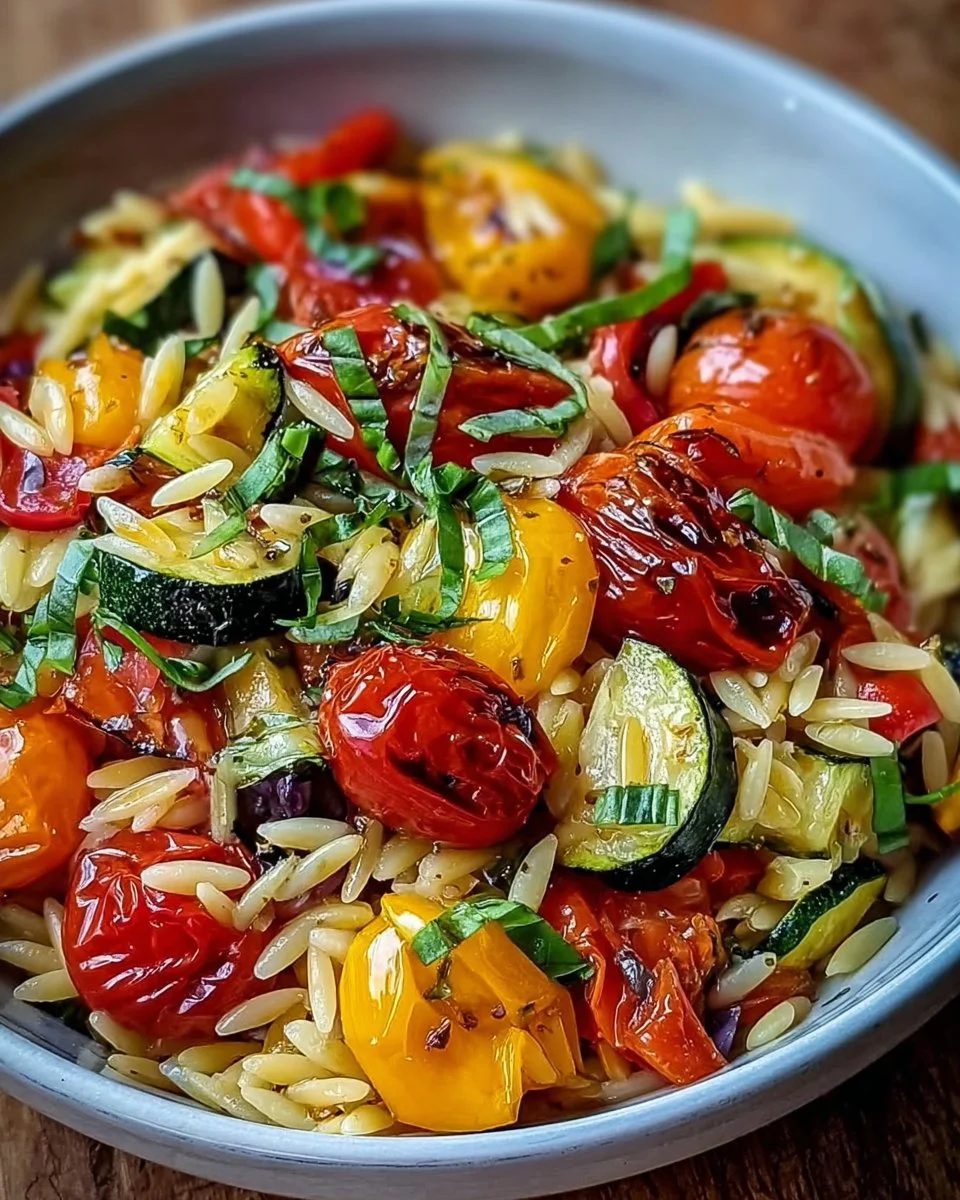
Opening Description
Imagine a bowl that smells like late-summer evenings: warm, caramelized bell peppers and zucchini, a scatter of blistered cherry tomatoes releasing their sweet juice, and little pearls of orzo that cradle every flavor. The contrast pleases the senses — the vegetables bring a charred edge and tender bite, the orzo offers a buttery, slightly chewy base, and the garlic threads a savory hum through every forkful. Each mouthful balances warmth, freshness, and a whisper of herbs.
This roasted vegetable orzo feels like comfort and sunshine in one dish. It works as a cozy weeknight dinner, a vibrant side for guests, or a make-ahead meal you happily reach for during busy days. The textures — crisp edges on the veg, plump orzo, bright herb flecks — keep every bite interesting and inviting.
Why You’ll Love This Roasted Vegetable Orzo
You’ll love this recipe because it plays both effortless and elevated. Roasting the vegetables concentrates their sweetness and adds those irresistible browned edges that taste like depth and time. Orzo cooks quickly and absorbs flavors so the dish never feels flat. It stands out because it transforms simple pantry and fridge staples into something that reads like a restaurant side and tastes like home.
This dish adapts to seasons and moods: toss in summer tomatoes and basil for brightness, or add roasted squash and sage in fall for earthiness. It suits potlucks, picnic containers, and solo dinners, and it stays delicious warm or chilled. The balance of textures and flavors makes it satisfying without heaviness — light enough for lunch, comforting enough for dinner.
Preparation Phase & Tools to Use
The right tools make this dish sing. Here’s what helps:
- Baking sheet: Use a rimmed sheet for even roasting and to catch juices. A heavy-duty sheet prevents warping and promotes better browning.
- Mixing bowl: A large bowl lets you toss the hot orzo and vegetables without spilling and gives space to taste and adjust seasoning.
- Saucepan with lid: Choose a medium saucepan for cooking orzo; a tight-fitting lid helps water return to a simmer quickly.
- Silicone spatula or wooden spoon: These tools protect cookware and help you fold ingredients gently.
- Colander: Drain the orzo quickly to stop cooking and avoid mush.
- Instant-read thermometer (optional): Check oven hotspots or doneness of vegetables if you want precision.
Practical prep tips:
- Cut vegetables into similar-size pieces so they roast evenly.
- Spread vegetables in a single layer on the sheet; crowding steams them rather than browning.
- Bring orzo water to a rolling boil before adding pasta to ensure firm, al dente results.
Ingredients for Roasted Vegetable Orzo
- 1 cup orzo pasta
- 2 cups mixed vegetables (bell peppers, zucchini, cherry tomatoes, etc.)
- 2 tablespoons olive oil
- 2 cloves garlic, minced
- Salt and pepper to taste
- Fresh basil or parsley for garnish (optional)
Key ingredient notes and substitutions:
- Orzo: This rice-shaped pasta gives a creamy, rice-like texture. Substitute with small pasta like acini di pepe or even short-grain couscous if needed, but adjust cooking times.
- Mixed vegetables: Use bell peppers, zucchini, and cherry tomatoes for color, sweetness, and acidity. Swap in eggplant, asparagus, mushrooms, or roasted carrots depending on season and preference.
- Olive oil: Use extra-virgin for flavor; use a neutral oil if you prefer a lighter taste.
- Garlic: Roast whole cloves with the vegetables for a mellow, sweet garlic flavor, or keep minced for a sharper kick.
- Herbs: Fresh basil brightens the dish; parsley adds a clean, herbaceous note. Finish with lemon zest for extra lift.
How to Make Roasted Vegetable Orzo
-
Preheat the oven to 400°F (200°C).
Tip: Place the oven rack in the middle so the vegetables brown evenly. -
Toss the vegetables with 2 tablespoons olive oil, the minced garlic, and a generous pinch of salt and pepper on a rimmed baking sheet. Spread them in a single layer, giving each piece breathing room.
Tip: If using cherry tomatoes, keep them whole so they blister and burst for sweet pockets of juice. -
Roast the vegetables for about 20–25 minutes until edges caramelize and the centers become tender. Shake the pan once halfway through to encourage even browning.
Tip: Roast an extra 5 minutes for deeper char; pull earlier if you want softer, less-charred veg. -
Meanwhile, bring a pot of salted water to a boil and cook the orzo according to package instructions until al dente (usually 7–9 minutes). Stir occasionally to prevent sticking.
Tip: Taste the orzo a minute before the lower end of the package time to avoid overcooking. -
Drain the orzo in a colander and return it to the pot or place it in a large mixing bowl. Add the roasted vegetables and toss gently to combine, letting those tomato juices meld with the pasta. Adjust seasoning with more salt and pepper to taste.
Tip: Add a splash of olive oil or a small knob of butter while the orzo is hot to create a silky coating. -
Serve warm or chilled, garnished with chopped fresh basil or parsley if desired. If you want an extra bright note, finish with a squeeze of lemon or a drizzle of balsamic glaze.
Tip: Letting the dish rest for 10 minutes allows flavors to settle and develop before serving.
Chef’s Notes & Helpful Tips
- Make-ahead: Roast the vegetables up to two days ahead and store them in an airtight container. Cook the orzo on the day you plan to serve and combine just before eating for the best texture. Alternatively, assemble everything and refrigerate for up to 24 hours for a chilled pasta salad.
- Cooking alternatives:
- Air fryer: Roast vegetables at 400°F for 12–15 minutes, shaking once; watch closely to avoid over-charring.
- Stove-top: Sear vegetables in a hot skillet in batches to brown if you don’t want to use the oven.
- Protein boosts: Stir in cooked chickpeas, shredded rotisserie chicken, grilled shrimp, or crumbled feta for a heartier meal.
- Adding fat and tang: Fold in a few tablespoons of ricotta or dollop Greek yogurt for creaminess, or mix in lemon juice and zest for brightness.
- Make it spicy: Add red pepper flakes or a spoonful of harissa when tossing for heat and complexity.
Common Mistakes to Avoid
- Crowding the pan: Overcrowded vegetables steam rather than roast; give them space for caramelization. Use two pans if necessary.
- Overcooking orzo: Don’t let orzo go mushy. Taste it early and drain as soon as it reaches al dente.
- Skipping seasoning: Salt and acid (lemon, vinegar, or tomatoes) transform the dish. Taste and adjust—underdressing makes flavors flat.
- Adding herbs too early: Stir fresh herbs in at the end to keep their bright flavor. If you add them during cooking, they lose their vibrancy.
- Serving immediately after roasting without a resting step: A short rest lets hot tomato juices integrate with the pasta; tossing while everything is too hot may mute fresh herb notes.
What to Serve With Roasted Vegetable Orzo
- Grilled lemon chicken — The citrus and char pair naturally with roasted veg and the orzo soaks up the juices.
- Crisp green salad with vinaigrette — A refreshing contrast that adds crunch and acidity.
- Seared salmon — Oily fish and the herbal orzo create a luxurious, balanced plate.
- Warm crusty bread — Use it to mop up any leftover tomatoey juices.
- Marinated olives and feta — Add a Mediterranean edge and salty tang.
- Roasted or grilled sausage — Hearty, spiced sausages complement the sweet-roasted notes.
- Simple soup (tomato or minestrone) — Start the meal light before moving to the orzo as a main.
- Steamed green beans with lemon — Keep sides green and bright for contrast.
Storage & Reheating Instructions
- Fridge: Store leftovers in an airtight container for up to 3–4 days. Keep dressing or delicate garnishes separate if possible.
- Freezer: Freeze in a freezer-safe container for up to 2 months, though texture of roasted vegetables may soften slightly on thawing.
- Reheating: Warm gently on the stove over low heat with a splash of water or broth to revive moisture, stirring frequently. Microwave in 30-second bursts, stirring between intervals, and add a little olive oil or lemon juice to refresh flavors.
- Serving chilled: For a pasta-salad style, chill for at least an hour to let flavors meld, then add fresh herbs and a finishing drizzle of olive oil before serving.
Estimated Nutrition Information
Approximate per serving (recipe yields about 3–4 servings):
- Calories: 300–360 kcal
- Total fat: 10–14 g (mostly from olive oil)
- Saturated fat: 1–2 g
- Carbohydrates: 45–55 g
- Protein: 6–10 g
- Fiber: 3–5 g
- Sodium: variable depending on added salt (approximately 200–350 mg)
Disclaimer: These values are rough estimates and depend on specific ingredient brands, portion sizes, and any optional add-ins you choose.
FAQs
Q: Can I make this dish gluten-free?
A: Yes. Swap the orzo for a gluten-free orzo-style pasta made from rice, corn, or a blend labeled gluten-free. Cook it according to the package, but watch timing closely — some gluten-free pastas soften quickly and can become mushy if overcooked. Alternatively, use pearl couscous made from gluten-free grains.
Q: How do I keep the roasted vegetables from getting soggy when combining with orzo?
A: Let the roasted vegetables rest briefly after they come out of the oven so some steam escapes. Drain the orzo well and, if needed, dry it briefly in the pot over low heat with a splash of oil. Toss gently rather than stirring vigorously to preserve texture.
Q: Can I serve this hot and cold?
A: Absolutely. Serve warm for a comforting main or side; chill it for a refreshing pasta salad. When serving chilled, finish with fresh herbs, an extra drizzle of olive oil, and a squeeze of lemon to revive bright flavors.
Q: How can I add more protein while keeping it vegetarian?
A: Add roasted chickpeas, toasted pine nuts, cannellini beans, or crumbled baked tofu. Stir in a spoonful of ricotta or a handful of grated Parmesan for additional richness and protein content.
Q: My tomatoes burst all over the pan and make the vegetables soggy. How can I prevent that?
A: Use smaller clusters of tomatoes or roast them on a separate sheet so juices don’t puddle under other vegetables. Alternatively, halve cherry tomatoes and roast them cut-side up to reduce splitting. Add tomatoes in the last 8–10 minutes of roasting if you want concentrated char without excess juice.
Q: Can I dress this like a salad? What vinaigrette works best?
A: Yes. A bright lemon vinaigrette (lemon juice, olive oil, Dijon mustard, garlic, salt, pepper) complements the roasted flavors. Balsamic vinaigrette adds sweetness and depth. Toss lightly and taste—acid should balance the oil.
Conclusion
Roasted vegetable orzo gives you the kind of dinner that feels both lovingly simple and unmistakably special: quick enough for weeknights, beautiful enough for guests, and flexible enough to fit whatever vegetables you have on hand. Each forkful delivers caramelized edges, soft tomato bursts, and pillowy orzo that carries flavor with ease. If you want a lemony, garlicky variation and more inspiration, check out Lemon Garlic Orzo with Roasted Vegetables – Vanilla And Bean. Now preheat your oven, slice those vegetables, and let the kitchen fill with that irresistible roasted aroma.
Print
Roasted Vegetable Orzo
- Total Time: 45 minutes
- Yield: 4 servings 1x
- Diet: Vegetarian
Description
A comforting dish featuring roasted vegetables and orzo pasta, delivering a balance of warmth, freshness, and savory flavors.
Ingredients
- 1 cup orzo pasta
- 2 cups mixed vegetables (bell peppers, zucchini, cherry tomatoes, etc.)
- 2 tablespoons olive oil
- 2 cloves garlic, minced
- Salt and pepper to taste
- Fresh basil or parsley for garnish (optional)
Instructions
- Preheat the oven to 400°F (200°C).
- Toss the vegetables with olive oil, minced garlic, salt, and pepper on a rimmed baking sheet.
- Spread them in a single layer, giving each piece breathing room.
- Roast the vegetables for about 20–25 minutes until caramelized and tender.
- Meanwhile, bring a pot of salted water to a boil and cook the orzo according to package instructions until al dente.
- Drain the orzo and return it to the pot or a mixing bowl.
- Add the roasted vegetables and toss gently to combine, adjusting seasoning as needed.
- Serve warm or chilled, garnished with fresh herbs.
Notes
For a heartier meal, stir in cooked chickpeas or crumbled feta. This dish can be enjoyed warm or as a chilled pasta salad.
- Prep Time: 15 minutes
- Cook Time: 30 minutes
- Category: Main Course
- Method: Baking
- Cuisine: Italian
Nutrition
- Serving Size: 1 serving
- Calories: 350
- Sugar: 5g
- Sodium: 300mg
- Fat: 12g
- Saturated Fat: 2g
- Unsaturated Fat: 8g
- Trans Fat: 0g
- Carbohydrates: 45g
- Fiber: 4g
- Protein: 10g
- Cholesterol: 0mg