
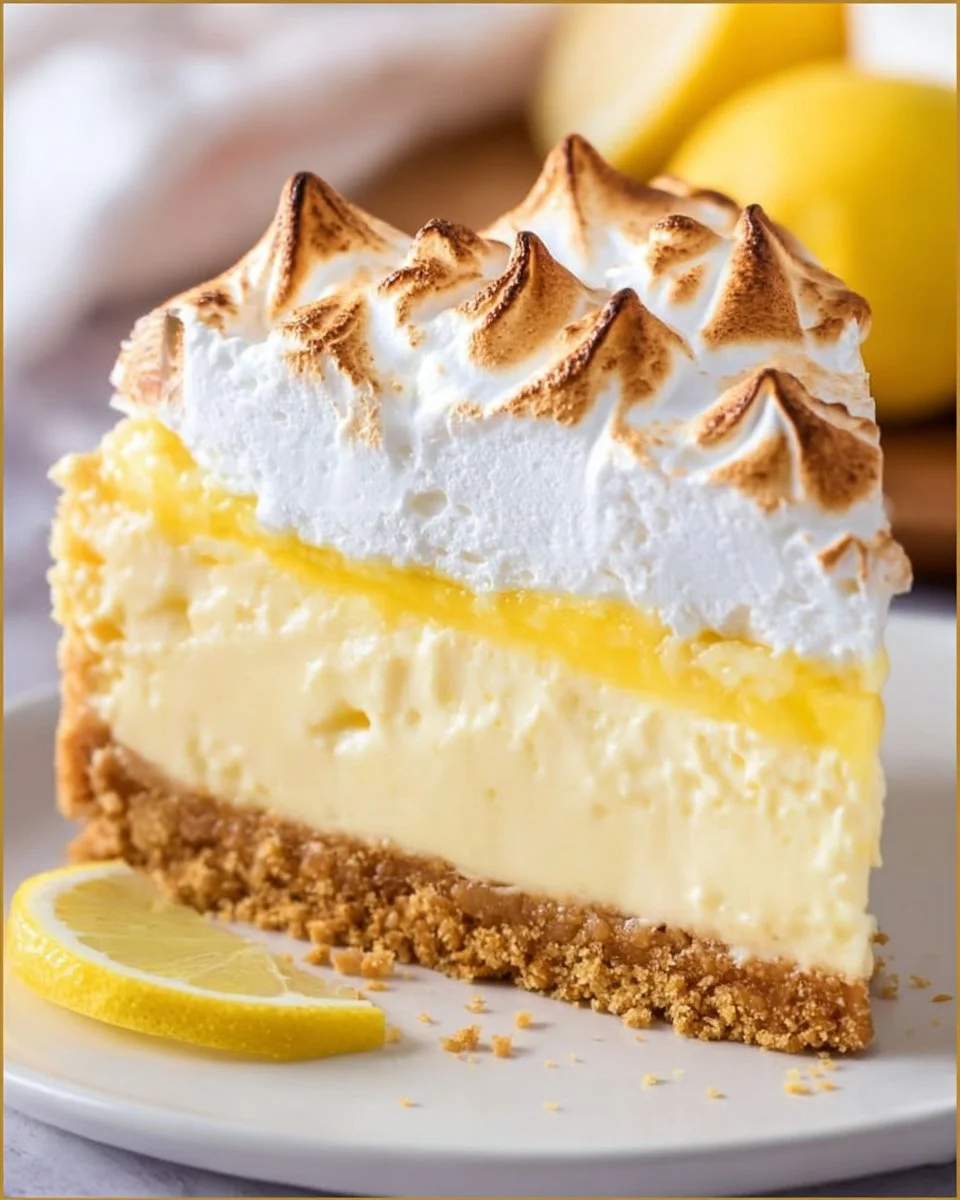
The first spoonful hits like sunshine: a bright, lemony tang that wakes your palate, followed by the silk-smooth tang of cheesecake and the fleeting, caramel-kissed crunch of toasted meringue. Each bite layers textures—the gentle resistance of a buttery graham crust, the creamy, velvety body of baked cream cheese, then the pillowy cloud of meringue that melts on the tongue. The aroma alone—warm butter, baked citrus, and a whisper of smoke from a torch—promises comfort and celebration at once.
This is the kind of dessert that makes an ordinary evening feel special and transforms a gathering into an occasion. It looks elegant on a dessert table, but it comforts like a family recipe. Whether you crave something bright after a heavy meal or want to impress guests with a show-stopping finale, this Lemon Meringue Cheesecake delivers: elegant, nostalgic, and utterly craveable.
Why You’ll Love This Lemon Meringue Cheesecake
You’ll love this cheesecake because it balances contrasts beautifully. The lemon curd provides a clean, zesty acidity that cuts through the richness of cream cheese, so each forkful tastes fresh rather than heavy. The graham cracker base adds a toasty, slightly crunchy foundation that keeps the texture interesting. The meringue crowns the cake with a light, cloudlike sweetness and a bronzed surface that gives a smoky, brûléed note.
This dessert suits many occasions: holiday dinners, birthday celebrations, al fresco summer meals, or a cozy weekend treat. It stands out because it layers three distinct components—crust, creamy cheesecake, and bright curd—then finishes with dramatic, toasted meringue. The result looks impressive but feels approachable; you get bakery-level drama from pantry ingredients and a little technique.
Preparation Phase & Tools to Use
A few well-chosen tools make this easier and more pleasurable:
- Springform pan (9-inch): The removable sides let you unmold the cake cleanly without damaging the meringue crown.
- Electric mixer (stand or hand): You need smooth, lump-free cheesecake batter and glossy, stable meringue.
- Food processor or rolling pin and zip-top bag: For finely pulsed graham cracker crumbs and even crust texture.
- Offset spatula and rubber spatula: For smooth spreads and gentle folding.
- Kitchen torch: For precise, even browning on the meringue. Optional but highly recommended.
- Baking sheet and cooling rack: To rest the pan and cool evenly.
- Mixing bowls and measuring cups: Accurate measurements give consistent results.
Practical preparation tips:
- Bring the cream cheese and eggs to room temperature before mixing. Cold cream cheese produces lumps and overworking.
- Line the bottom of your springform pan with parchment for an easier release.
- If you plan to use a water bath, wrap the outside of the springform with heavy-duty foil to prevent leaks.
- Prep the lemon curd and meringue bowl while the cheesecake cools to make assembly seamless.
Ingredients for Lemon Meringue Cheesecake
- 1 ½ cups graham cracker crumbs
- ½ cup unsalted butter, melted
- 2 cups cream cheese
- 1 cup sugar
- 3 large eggs
- 1 teaspoon vanilla extract
- 1 cup lemon curd
- 3 egg whites
- ¼ teaspoon cream of tartar
- ½ cup sugar (for meringue)
Key ingredient notes and swaps:
- Graham cracker crumbs provide a buttery, slightly sweet crunch. Substitute digestive biscuits or crushed shortbread for a different flavor; use Oreo crumbs for a chocolate twist (omit additional sugar if Oreos are sweet).
- Unsalted butter lets you control saltiness; use salted butter if that’s all you have and omit any extra salt elsewhere.
- Use full-fat cream cheese for the silkest texture. Low-fat versions often yield a looser set and a tangier taste.
- Lemon curd can be store-bought for speed or homemade for extra brightness. If you make it from scratch, a bit of lemon zest in the curd amplifies aroma.
- For the meringue, pasteurized egg whites or powdered egg whites work if you’re concerned about raw whites; add a tablespoon of warm sugar syrup for extra stability.
How to Make Lemon Meringue Cheesecake
-
Preheat the oven to 325°F (163°C). Grease a 9-inch springform pan and line the bottom with parchment.
- Tip: If you prefer a perfectly smooth rim, press parchment into the pan so it comes slightly up the sides.
-
Make the crust: combine 1 ½ cups graham cracker crumbs with ½ cup melted unsalted butter in a bowl until crumbs are evenly moistened. Press the mixture firmly and evenly into the bottom of the springform pan, using the bottom of a measuring cup to pack it tight.
- Tip: Chill the crust 10–15 minutes before adding the batter to help it set and prevent sogginess.
-
Beat the cheesecake batter: in a mixing bowl, beat 2 cups cream cheese and 1 cup sugar on medium until smooth and lump-free. Add the 3 eggs one at a time, beating briefly after each—just until incorporated. Mix in 1 teaspoon vanilla extract. Stop as soon as the eggs are combined to avoid incorporating excess air.
- Tip: Scrape the bowl often and keep the mixer speed moderate; overbeating traps air and can cause cracks.
-
Pour the cheesecake batter over the chilled crust and tap the pan gently on the counter to release any large air bubbles. Place the pan on a baking sheet.
- Optional: For a silky, crack-free top, bake the cheesecake in a water bath. Wrap the springform securely with foil and set the pan in a roasting pan. Pour hot water into the roasting pan until it reaches halfway up the sides of the springform.
-
Bake for 55 minutes to 1 hour, or until the edges look set and the center has a slight, gentle jiggle when you nudge the pan.
- Tip: Avoid opening the oven door during the first 40 minutes to maintain even temperature. If the top browns too much, tent loosely with foil.
-
Remove from the oven and place on a cooling rack. If the cheesecake cracked slightly, don’t panic—cooling slowly helps it settle. Let it cool completely to room temperature, then chill in the refrigerator until fully set (at least 4 hours, ideally overnight).
- Tip: Run a thin knife around the edge of the cheesecake after it cools to prevent the filling from sticking to the pan sides as it shrinks while chilling.
-
Spread 1 cup lemon curd evenly over the chilled cheesecake, leaving a clean, glossy layer that contrasts with the creamy filling.
- Tip: Warm the lemon curd briefly if it’s stiff to make spreading smooth—microwave in 10-second bursts.
-
Make the meringue: in a clean bowl, beat 3 egg whites and ¼ teaspoon cream of tartar on medium speed until soft peaks form. Gradually add ½ cup sugar, a tablespoon at a time, then increase speed and beat until stiff, glossy peaks form.
- Tip: Make sure no yolk or fat touches the whites—even a trace prevents whipping. Use a metal bowl for best results.
-
Spread the meringue over the lemon curd, creating peaks with the back of a spoon or spatula for dramatic texture.
- Tip: Swirl the meringue into little peaks so the torch or broiler gets nooks to caramelize for a café-style finish.
-
Toast the meringue: use a kitchen torch to evenly brown the meringue until golden. If you don’t have a torch, set the oven to broil and place the cheesecake under the broiler for 30–60 seconds—watch steadfastly; it burns quickly.
- Tip: If using a broiler, move the rack close to the heat but give enough distance to avoid scorching. Rotate quickly for even color.
-
Chill the finished cheesecake for at least 2 hours to firm the layers and meld flavors before slicing. For clean slices, dip a sharp knife into hot water between cuts and wipe dry.
- Tip: For the prettiest presentation, wait longer—overnight chilling yields the best texture.
Chef’s Notes & Helpful Tips
- Make-ahead: You can bake the cheesecake 1–2 days ahead and keep it refrigerated without the meringue. Add lemon curd and meringue the day you plan to serve for freshest texture and appearance. You can freeze an unfrosted cheesecake (well-wrapped) for up to 2 months; thaw in the fridge overnight before finishing.
- Cooking alternatives:
- No torch? Use the oven broiler in short bursts (30–60 seconds) while watching closely.
- Mini cheesecakes: Bake in a muffin tin for 20–25 minutes at 325°F; reduce curd and meringue proportions accordingly and torch lightly.
- Instant Pot/steam oven: You can steam smaller cheesecakes for a custardy texture; adjust time and follow pressure-cooking guidelines for cheesecakes.
- Customization ideas:
- Add 1–2 teaspoons lemon zest to the cheesecake batter for amplified citrus aroma.
- Swirl raspberry or blueberry compote into the curd for a floral-fruity contrast.
- Fold in 1/2 cup sour cream or mascarpone into the batter for extra silkiness.
- Swap graham crumbs for almond flour or pecan-crusted base for nutty depth.
Common Mistakes to Avoid
- Overbeating the batter: This incorporates too much air and leads to cracks or a spongey texture. Mix until just smooth and occasional streaks disappear.
- Baking at too high a temperature: The edges will overcook while the center remains underdone. Stick to 325°F and resist raising the heat to speed things up.
- Using cold ingredients: Cold cream cheese or eggs create lumps. Allow dairy and eggs to come to room temperature for an even batter.
- Letting the meringue sit too long before toasting: Meringue can weep or we lose volume. Toast and serve within a few hours for best texture.
- Toasting too close or too long: A too-hot torch or broiler setting chars quickly. Keep the torch moving and maintain a safe distance—build color gradually.
- Cutting without drying the knife: A cold knife dipped in hot water and wiped between slices creates smooth, glossy cuts without tearing the meringue.
What to Serve With Lemon Meringue Cheesecake
- Fresh mixed berries (strawberries, raspberries, blueberries): Provide a tart contrast and add bright color on the plate.
- Raspberry coulis or berry compote: A spoonful cuts the sweetness and complements the lemon.
- Espresso or strong black coffee: The bitterness balances the cake’s richness and refreshes the palate.
- Sparkling wine or Prosecco: Bubbles cleanse the mouth between creamy bites and feel celebratory.
- Shortbread cookies or buttery tuile: Add an extra crunch element alongside creamy texture.
- Lemon verbena iced tea or chamomile: Light herbal notes echo the dessert’s citrus while calming the finish.
- Whipped cream with a hint of vanilla: Softens the lemon’s sharpness for guests who prefer milder sweetness.
- Salted caramel drizzle (sparingly): For those who love sweet-salty interplay, a tiny drizzle deepens complexity.
Storage & Reheating Instructions
- Refrigerator: Store covered in the fridge for up to 4–5 days. Keep the meringue covered lightly with a cake dome to avoid condensation that can soften the peaks.
- Freezer: Freeze without the meringue for best results. Wrap the whole cake tightly in plastic wrap and then foil, or freeze individual slices. Store up to 2 months. Thaw overnight in the refrigerator, then top with fresh lemon curd and meringue.
- Reheating: Cheesecake tastes best chilled. If you prefer warm meringue, re-toast the meringue with a torch for a few seconds just before serving. Avoid microwaving whole slices—heat will collapse the texture. For a slightly warmed slice, remove the meringue, heat the slice in a 300°F oven for 5–8 minutes, then re-top with fresh toasted meringue.
Estimated Nutrition Information
Approximate per slice (assuming 12 slices):
- Calories: 500–560 kcal
- Fat: 34–38 g (saturated fat 18–22 g)
- Carbohydrates: 42–50 g (sugar 28–34 g)
- Protein: 7–9 g
- Sodium: 200–300 mg
Nutrition varies with ingredient brands, substitution choices, portion size, and whether you include the meringue topping. Use this as a rough guide only.
FAQs
Q: Can I make this cheesecake ahead of time?
A: Absolutely. Bake the cheesecake and chill it up to 48 hours ahead without the lemon curd and meringue. Add the curd and whip/toast the meringue on the day you plan to serve for the freshest look and texture. If you need to go further out, freeze the unfrosted cheesecake and thaw overnight before finishing.
Q: Is the meringue safe to eat since it uses raw egg whites?
A: Traditional Swiss or Italian meringues use cooked sugar syrup or heat-stabilized whites. This recipe uses egg whites whipped with sugar; for food safety, you can use pasteurized egg whites or make an Italian meringue (heat sugar and water to soft-ball stage and pour into whipping whites) to pasteurize the mixture. If you serve to young children, elderly, or immunocompromised guests, opt for pasteurized whites.
Q: My cheesecake cracked—can I fix it?
A: Small cracks are cosmetic—spread lemon curd and fluffy meringue over the top to hide imperfections. To prevent future cracking, avoid overmixing and consider a water bath to moderate oven heat. Cooling the cake slowly with the oven door slightly ajar for 30 minutes after baking can also help reduce cracking.
Q: How do I get a perfectly toasted, even meringue without a torch?
A: Use the broiler on low and keep the cheesecake a safe distance from the heat. Place the cake on the top rack and broil in very short bursts (15–30 seconds), rotating to brown evenly. Watch continuously—broilers vary and can burn quickly.
Q: Can I make smaller, individual lemon meringue cheesecakes?
A: Yes. Bake in a lined muffin tin or mini springform pans at the same temperature for roughly 20–25 minutes, checking for set edges and a slight jiggle in the center. Adjust lemon curd and meringue quantities and torch each individually for a charming presentation.
Q: Will the crust get soggy from the filling?
A: To minimize sogginess, press the crust firmly and chill briefly before pouring the filling. Some bakers blind-bake the crust for 8–10 minutes at 350°F to set it further, which helps if you like a distinctly crisp base.
Conclusion
If you want another take or step-by-step photos to compare techniques, this version from Lemon Meringue Cheesecake – Life Love and Sugar offers beautiful visuals and helpful tips. Now tie on an apron, invite a few friends, and make a cheesecake that smells like sunshine and tastes like celebration—then watch it disappear slice by slice.
Print
Lemon Meringue Cheesecake
- Total Time: 90 minutes
- Yield: 12 servings 1x
- Diet: Vegetarian
Description
A bright, lemony cheesecake with a buttery graham cracker crust and a toasted meringue topping that creates a delightful balance of flavors and textures.
Ingredients
- 1 ½ cups graham cracker crumbs
- ½ cup unsalted butter, melted
- 2 cups cream cheese
- 1 cup sugar
- 3 large eggs
- 1 teaspoon vanilla extract
- 1 cup lemon curd
- 3 egg whites
- ¼ teaspoon cream of tartar
- ½ cup sugar (for meringue)
Instructions
- Preheat the oven to 325°F (163°C). Grease a 9-inch springform pan and line the bottom with parchment.
- Combine 1 ½ cups graham cracker crumbs with ½ cup melted unsalted butter in a bowl until crumbs are evenly moistened. Press firmly into the bottom of the springform pan.
- Chill the crust for 10–15 minutes before adding the batter.
- Beat 2 cups cream cheese and 1 cup sugar on medium until smooth. Add 3 eggs one at a time, mixing just until incorporated. Mix in 1 teaspoon vanilla extract.
- Pour the cheesecake batter over the crust and tap the pan gently to release air bubbles. Place on a baking sheet.
- Bake for 55 minutes to 1 hour, or until edges are set and center jiggles.
- Cool the cheesecake completely, then chill in the refrigerator until set (at least 4 hours).
- Spread 1 cup lemon curd over the chilled cheesecake.
- Beat 3 egg whites and ¼ teaspoon cream of tartar until soft peaks form. Gradually add ½ cup sugar, beating until stiff peaks form.
- Spread the meringue over the lemon curd and create peaks.
- Toast the meringue using a kitchen torch until golden. Chill the cheesecake for at least 2 hours before slicing.
Notes
For best results, chill the cheesecake overnight after assembly. Use a hot knife for clean slices.
- Prep Time: 30 minutes
- Cook Time: 60 minutes
- Category: Dessert
- Method: Baking
- Cuisine: American
Nutrition
- Serving Size: 1 slice
- Calories: 500
- Sugar: 30g
- Sodium: 250mg
- Fat: 38g
- Saturated Fat: 22g
- Unsaturated Fat: 10g
- Trans Fat: 0g
- Carbohydrates: 42g
- Fiber: 1g
- Protein: 9g
- Cholesterol: 180mg